Oct
21
2010

Oct
19
2010
Rocking Retro: Styx – Greatest Hits

My good friend Ryan introduced me to a lot of classic rock during our grade school years. He was a CD collector at heart, grabbing everything he heard on 95.7 The Kar – KARX-FM in Amarillo, TX, the nearby classic rock station. This was the late 90’s, so the format “classic rock” was still a pretty new thing, and the playlists were a lot deeper. It was a good way to introduce myself to the past, even if most of it was album-oriented, 70’s music, and pretty generic overall.
Ryan and I would do the weekly album swap – he would grab my newer stuff, and I would burn CDs from his steadily growing classic rock stack. Some of it he loved, some of it I hated, and vice versa. One album in particular we couldn’t agree on was Greatest Hits by Styx. Though it was his album, he didn’t much care for it, and so when I borrowed it for a length of time most would consider theft, he didn’t mind in the least.
I suppose it’s my affinity for late 70’s ballad-y, arena rock (“Can’t Fight This Feeling” by REO Speedwagon is one of my all-time faves, and I’m pretty certain I was conceived to “Waiting For a Girl Like You” by Foreigner), but man, this compilation is still great, years later. I remember the first time I listened to it all the way through, shocked at how many Styx songs I already knew…I just didn’t know they were Styx songs. It’s great for road trips, karaoke picks, and general fist-pumping in the bar. AOR was a great genre combining sheer talent and rock’s best trait – escapism. And Styx delivered like no other. Below are my favorites.
Oct
18
2010
My Top 300 Songs of the 2000s – 140-131
Today I continue my ongoing feature showcasing my personal picks for the best songs of the past decade, posting ten songs at a time.
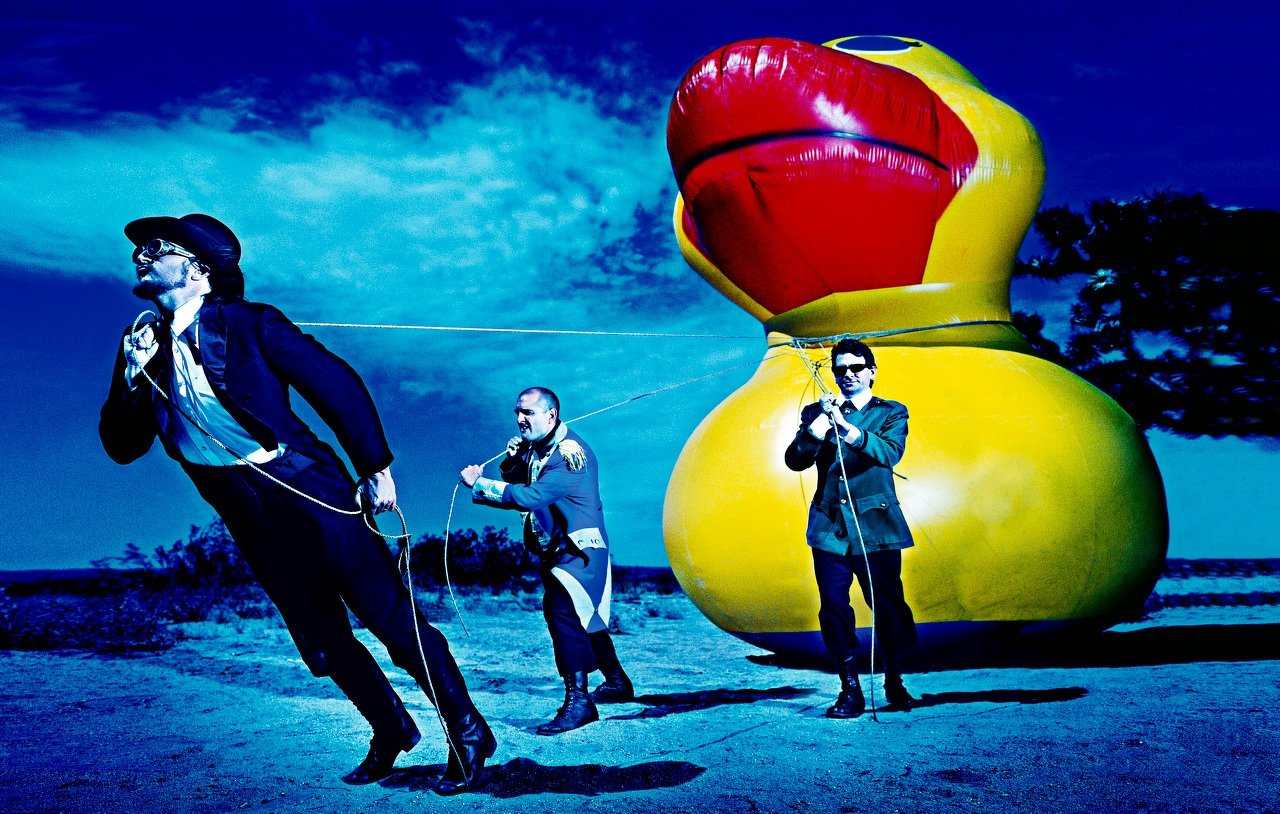
140. Primus – Pilcher’s Squad
Sgt. Norman “Nobby” Pilcher was the infamous British police officer best known for planting drugs to frame rock stars and hippies in the 60’s. Up until getting caught for doing so in 1973, Pilcher managed to collect quite a resume of celebrities in handcuffs, including two Beatles, George Harrison and John Lennon, as well as Mick Jagger and Donovan. He is the subject of this two-minute ditty found on Primus’ 2003 reunion EP Animals Should Not Try To Act Like People. The song is wild and weird, all while frontman Les Claypool delivers a fine tale of a corrupt man of the law, breaking only for a two-second solo from guitar virtuoso Larry “Ler” Lalonde (“Go Ler!…..Thanks Ler!”).
Oct
16
2010
The Top 50 Albums of the 2000s – Electric Version
Today I begin a new series of posts dedicated to the best albums of the last decade, posting analysis of one album at a time.

50. The New Pornographers – Electric Version
While Mass Romantic introduced the world to a phenomenal Canadian supergroup, Electric Version transformed the New Pornographers into a solid band all on their own, never mind that the crew consists of some of indie rock’s finest. Carl Newman’s and Neko Case’s vocal trade-offs provide the highlights for this unforgettable 2003 disc, mostly written by Newman, though Dan Bejar contributed a few memorable nuggets of his own, particularly “Testament to Youth In Verse.” Still, the gems here are both Newman-penned and Case-sung, including the masterpiece “The Laws Have Changed” and the single “All For Swinging You Around,” which featured an incredible jump-rope music video.
Electric Version gave the already-superb pop craftsmanship of Carl Newman a new standard to beat, and he would rise to the challenge and come close to matching his best with 2005’s Twin Cinema. Still, this, the New Pornographers’ sophomore effort, is their finest, an earnest, hook-laden, beautiful album that is impossible to stop listening to.
The New Pornographers – The Electric Version
Oct
15
2010
Currently Digging: The Corin Tucker Band

Corin Tucker, formerly of Sleater-Kinney fame, has released her first solo album with her new backing group, and while the results arguably aren’t as revolutionary as the work she put in with her seminal 90’s band, the music is still memorable.
The title track, in particular, shows 1000 Years as an album revealing a revered musician trying brave new things. The screech of the riot grrl sound is minimal here, as the disc opens with a soft, acoustic-led song and moves to the poppy, jumpy “Half a World Away.” Still, Tucker’s earnest vocals remain the same, even if she’s well out of her comfort zone.
Her past certainly is utilized, however, but only to further her progression – we can hear the loud punk attitude bleed through this mostly soft, introspective effort, as in tracks “Doubt” and “Riley.” The ending product, however, is kin of maturation and experimentation rather than merely resembling a strong Kinney B-side. The ending track, “Miles Away,” is a soulful piano number with a bright Tori Amos quality.
The slower, softer approach may be jarring for some SK purists, but she has certainly come a long way with her sound, and there are still some loud moments that give us an idea of where Corin Tucker has been and, something more exciting, where she’s headed.
The Corin Tucker Band – 1,000 Years
Oct
14
2010
Five MP3s You Must Grab 10/14/10

Oct
13
2010
At a Glance: Journalism In the Age of Data
Journalism in the Age of Data from Geoff McGhee on Vimeo.
It’s about an hour long, but I encourage you, especially those of you interested in the future of news, media, and journalism, to take a look at this fascinating short doc on data visualization as the world moves forward from print to digital.
The film, produced during a journalism fellowship at Stanford University, covers a broad range of topics about graphics design for news sources, including a showcase of some of the finest (and most confusing) graphs and charts produced recently. The main focus is the innovative work the New York Times has done, and some of the world’s brightest minds in this burgeoning medium. Indeed, as software and data programs become more common and accessible, the art of translating a ton of data into something the average newspaper reader can understand is challenging, intriguing, and creative.
Oct
12
2010
Movie Trailer Rundown 10/12/10
Trailers for upcoming movies. Some are good, some not as much.
Share This Blog
