Nov
4
2010

Nov
2
2010
Rocking Retro: The Cars

I suppose most of the music nerds my age were generally introduced to classic rock mainstays via a greatest hits compilation. My last Rocking Retro post, dedicated to Styx, showed that certainly was the case for me, and the Cars, one of my all time favorite bands, are no exception. Ever seen this gem of an album cover?

Yep. That’s the one. Played it for hours when I was five years old. I remember hiding behind the couch during the intro of “Since You’re Gone” because I was frightened of the rhythmic clicking. Once Ric started singing, though, I came out from hiding and sang along.
Anyone with just a little knowledge of the beauty that is New Wave knows that the Cars rule it – they are an American treasure. So how do I feel about the recent news that they’ve reunited? Like most 80’s band resurgences, I don’t think it’s particularly the best idea, though it would be cool to see them live, even without the late Benjamin Orr. And it’s gotta be better than the silly Todd Rundgren “New Cars” outing a few years ago.
Anywho, here’s a sampling of some of my favorites. You’ve probably heard them all a million times, but why not crank them one more time?
Oct
27
2010
The Top 50 Albums of the 2000s – Yoshimi Battles the Pink Robots
Today I continue a series of posts dedicated to the best albums of the last decade, posting analysis of one album at a time.

49. The Flaming Lips – Yoshimi Battles the Pink Robots
There’s plenty of works to choose from, and yes, there are die-hards who would claim several alternatives, but for many Flaming Lips fans, the “favorite album” answer is more or less split right down the middle between 1999’s masterpiece The Soft Bulletin and the 2002 follow-up Yoshimi Battles the Pink Robots. And while the former isn’t eligible for this list (check the release date, yo!), I still am partial to the latter, which was, at the prime age of 16, my first introduction to these Oklahoma City darlings.
I suppose you could say the two go hand in hand – Bulletin being the Rubber Soul to Yoshimi‘s Revolver. But the comparison kind of ends there. Because while the Liverpool lads went from Dylan-esque to full-on studio experimentation and reinvention, the Lips took the celestial sounds of their newfound popcraft to a more consistent level. Sure, the experimentation is all here, the sonic whooshes and blips and beeps and crunchy electronic noises found on previous works, but here Wayne Coyne’s earnestness is at the forefront, and usually accompanied by a solid backing of beautiful sounds.
Take the acoustic foundation of the album’s highlights (of which there are many) – “Ego Tripping At the Gates of Hell,” “Do You Realize,” and the title track all have memorable strumming to provide a background for Coyne’s honest, revealing croon. He takes the topics discussed previously to a deeper level, as heard on the classic aforementioned tearjerker “Do You Realize.” Love, life, and the universe are all taken to task here with sentimental, trademark sonic flourishes to bask in while you ponder.
Upon its release, much like the Soft Bulletin, Yoshimi was compared to the latest effort from Radiohead. Much of the comparison was the electronic experimentation used, and the stark differences in mood; one reviewer even described the album as music that Radiohead would make if “Thom Yorke believed in God.” In retrospect, these comparisons seem apt for the time, but no more, because the brilliance that is Yoshimi, made by a band who had already been blowing minds for two decades, is in a league of its own.
Oct
26
2010
Currently Digging: Ben Folds & Nick Hornby

Since his breakthrough in the early 90’s with the Five, Ben Folds has made his trademark piano pop and lyrical witticism known. Combining parts snark, smart-assery, and sentiment, Folds’ quirk has been adored by millions for years. Lyrically, you could probably aptly compare hm to a groundbreaking, clever, honest film/novel like, say…..High Fidelity.
How appropriate then, that the creator of that aforementioned work would be a Ben Folds fan, and that this pairing would grow into a long-lasting friendship which has blossomed into a collaborative musical effort. And indeed, the team of Nick Hornby/Ben Folds is a perfect match on Lonely Avenue. With the author at the lyrical helm, Folds is free to focus on the score, and the results are the freshest he’s sounded in a while.
The lyrics, unsurprisingly, feel like Folds tunes, mixing up cynicism with pathos, practicality with sympathy. “Levi Johnston’s Blues” is an earnest look into Bristol Palin’s baby dadddy, with no sarcasm attached. “Belinda” is a sad tale of a one-hit wonder who clings to his past fame and the sweetheart that inspired it. “Claire’s Ninth” is a frank look at how a young girl deals with divorce on her birthday.
Hornby’s words are strong, and they fit perfectly with Folds’ keen approach to melody, and because of this solid teaming, the pianist has delivered his finest album since Rockin’ the Suburbs. With an outing this impressive the first time around, how could you not root for a sequel?
Ben Folds & Nick Hornby – Levi Johnston’s Blues
Oct
25
2010
Five MP3s You Must Grab 10/25/10
Oct
19
2010
Rocking Retro: Styx – Greatest Hits

My good friend Ryan introduced me to a lot of classic rock during our grade school years. He was a CD collector at heart, grabbing everything he heard on 95.7 The Kar – KARX-FM in Amarillo, TX, the nearby classic rock station. This was the late 90’s, so the format “classic rock” was still a pretty new thing, and the playlists were a lot deeper. It was a good way to introduce myself to the past, even if most of it was album-oriented, 70’s music, and pretty generic overall.
Ryan and I would do the weekly album swap – he would grab my newer stuff, and I would burn CDs from his steadily growing classic rock stack. Some of it he loved, some of it I hated, and vice versa. One album in particular we couldn’t agree on was Greatest Hits by Styx. Though it was his album, he didn’t much care for it, and so when I borrowed it for a length of time most would consider theft, he didn’t mind in the least.
I suppose it’s my affinity for late 70’s ballad-y, arena rock (“Can’t Fight This Feeling” by REO Speedwagon is one of my all-time faves, and I’m pretty certain I was conceived to “Waiting For a Girl Like You” by Foreigner), but man, this compilation is still great, years later. I remember the first time I listened to it all the way through, shocked at how many Styx songs I already knew…I just didn’t know they were Styx songs. It’s great for road trips, karaoke picks, and general fist-pumping in the bar. AOR was a great genre combining sheer talent and rock’s best trait – escapism. And Styx delivered like no other. Below are my favorites.
Oct
16
2010
The Top 50 Albums of the 2000s – Electric Version
Today I begin a new series of posts dedicated to the best albums of the last decade, posting analysis of one album at a time.
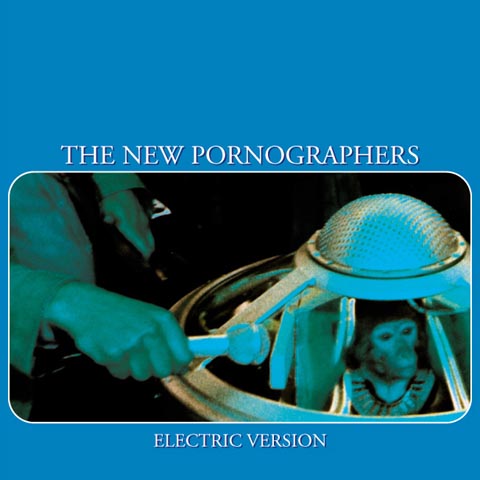
50. The New Pornographers – Electric Version
While Mass Romantic introduced the world to a phenomenal Canadian supergroup, Electric Version transformed the New Pornographers into a solid band all on their own, never mind that the crew consists of some of indie rock’s finest. Carl Newman’s and Neko Case’s vocal trade-offs provide the highlights for this unforgettable 2003 disc, mostly written by Newman, though Dan Bejar contributed a few memorable nuggets of his own, particularly “Testament to Youth In Verse.” Still, the gems here are both Newman-penned and Case-sung, including the masterpiece “The Laws Have Changed” and the single “All For Swinging You Around,” which featured an incredible jump-rope music video.
Electric Version gave the already-superb pop craftsmanship of Carl Newman a new standard to beat, and he would rise to the challenge and come close to matching his best with 2005’s Twin Cinema. Still, this, the New Pornographers’ sophomore effort, is their finest, an earnest, hook-laden, beautiful album that is impossible to stop listening to.
The New Pornographers – The Electric Version
Oct
15
2010
Currently Digging: The Corin Tucker Band

Corin Tucker, formerly of Sleater-Kinney fame, has released her first solo album with her new backing group, and while the results arguably aren’t as revolutionary as the work she put in with her seminal 90’s band, the music is still memorable.
The title track, in particular, shows 1000 Years as an album revealing a revered musician trying brave new things. The screech of the riot grrl sound is minimal here, as the disc opens with a soft, acoustic-led song and moves to the poppy, jumpy “Half a World Away.” Still, Tucker’s earnest vocals remain the same, even if she’s well out of her comfort zone.
Her past certainly is utilized, however, but only to further her progression – we can hear the loud punk attitude bleed through this mostly soft, introspective effort, as in tracks “Doubt” and “Riley.” The ending product, however, is kin of maturation and experimentation rather than merely resembling a strong Kinney B-side. The ending track, “Miles Away,” is a soulful piano number with a bright Tori Amos quality.
The slower, softer approach may be jarring for some SK purists, but she has certainly come a long way with her sound, and there are still some loud moments that give us an idea of where Corin Tucker has been and, something more exciting, where she’s headed.
The Corin Tucker Band – 1,000 Years
Oct
14
2010
Five MP3s You Must Grab 10/14/10
Oct
9
2010
Rocking Retro: Men At Work – Business As Usual
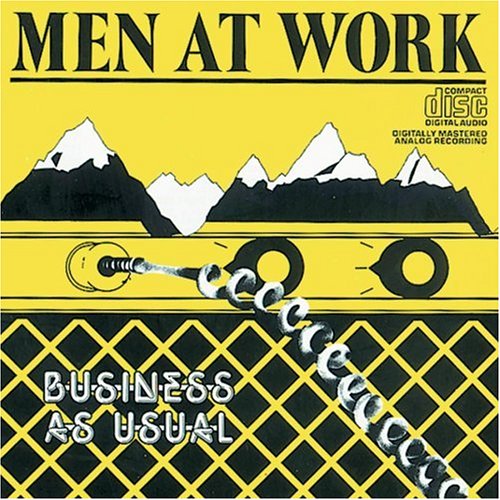
Last night, while winding down from an amazing evening watching Monsters of Folk at Stubb’s (M. Ward is god, for those not in the know), my friend Derin, acting as evening DJ for our small party, put on the album above – the successful 1981 debut from Men At Work. It was a wise selection.
Business As Usual is best known for the hits “Who Can It Be Now?” and the would-be litigious nightmare “Down Under.” It is one of the most successful albums of the early 1980’s (in good company with a little album called Thriller), selling 15 million albums worldwide, 6 million of those stateside. In the US alone, Business As Usual spent a surprising 15 weeks at #1, and Men At Work remain the only Australian band to score the #1 song (“Down Under”) and #1 album in America simultaneously.
The album is heralded as an 80’s pop classic, obviously, and for good reason. Main songwriter Colin Hay could certainly craft a pop gem (with the occasional help, it should be noted, from Ron Strykert and Greg Ham) and the album’s contribution to the then-burgeoning New Wave sound is unmatched.
Share This Blog
