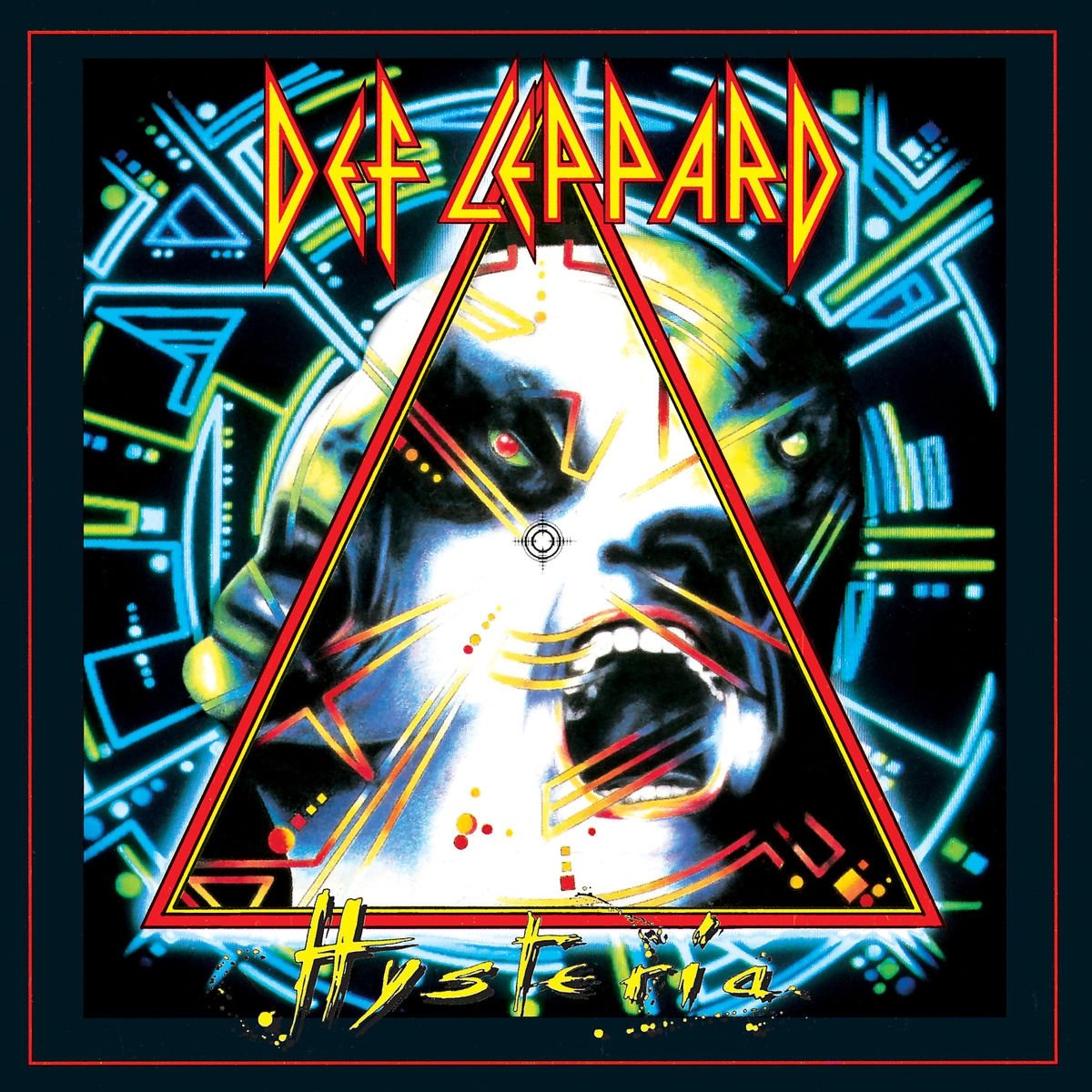
Let’s state the obvious first: Hysteria is a monster of an album. We’re talking thundering drums, loud-ass guitars, screeching solos, to-the-rafters vocals from Joe Elliott, in-the-pocket background vocals from everyone else, unforgiving hooks. It’s an hour-plus of Mutt Lange-produced maximalism. Even when the tempo slows (as on hit “Love Bites”), everything is still in the red. The choruses are confrontational, even when you know they’re coming (and you always know when they’re coming). It’s an album of its time. You can vividly see all of the big hair if you close your eyes.
Hysteria sold 20 million copies worldwide, buttressed by hit songs like the deathless stripper anthem “Pour Some Sugar On Me” and the fucking excellent title track. But anyone who bought the record probably wasn’t disappointed with the rest; every song follows the same template, and it all sounds, rather gloriously, like the summer of 1987.
Four years had passed since Def Leppard had broken through to the masses with their smash album Pyromania, and the band almost missed their shot to capitalize on the glam metal takeover that would come to define the decade. The band began work with Jim Steinman before parting ways; apparently the Bat Out Of Hell mastermind was too grandiose and not pop-focused enough for Def Leppard’s objectives.
Tragedy struck the band when drummer Rick Allen lost his arm to a horrific car crash; the ensuing overzealous media coverage inspired the album’s title. This event, of course, delayed recording, but probably the biggest slowdown was Lange’s meticulous attention to detail; he had ambitiously sought to make the hair metal version of Thriller, where every song could conceivably be released as a single. This resulted in a laborious process of stacking and processing background vocal harmonies and painstakingly filtering drum sounds through a Fairlight CMI sampler.
I love the 80s, but the whole hair metal thing has eluded me. There was something about the sameness of the sound, the overused, indistinct template of big gated drums and screeching guitar solos that I found slightly off-putting. As a fan of big hooks, pop production, and pyrotechnics, there are moments and songs I have enjoyed, but as a whole I had dismissed the era as dated, something that you had to be there for to truly enjoy. It was slightly before my time, which means that by the time I was paying attention to what was in fashion, hair metal was very, very uncool – old enough to seem out of touch, and not old enough to have been critically reassessed.
With that background in context, I really enjoyed my cursory listen to this grandiose, expensive-sounding album. Hysteria is a lot of fun, if completely trapped in the moment it was created. Most songs work by themselves as potential radio singles, but taken as a whole it all starts to sound the same. That’s one misstep from Mutt Lange and the band, I think. They completely overdid it – in an effort to make the glam version of Thriller, they forgot an important element to that blockbuster album from Michael Jackson. It works as a collection of great pop songs, sure, but it’s also a fantastic album – a diverse listen from start to finish (and of adequate length). Hysteria has too much going on, and a lot of it is the same thing over and over. No amount of monster hooks is going to fix that issue.
The whole ordeal of recording and producing Hysteria was excessive and expensive and the end result was shiny and glossy and ready for mass consumption. Are those Ronald Reagan samples in “Gods of War?” Is Hysteria the most 1980s album ever? I will not attempt to answer these burning questions. Instead, all I can say is that the entire listen is egregiously slick, regularly brilliant, and occasionally overcooked. But, more than anything, it’s a thrill ride.
What a giant, corporate nothing of a song. Bryan Adams, riding on a comeback wave in the early 90s, recruited fellow raspy, middle-of-the-road white dude legacy pop stars Sting and Rod Stewart for this promotional vehicle for The Three Musketeers movie. What they came up with (alongside Mutt Lange) is a dreadful, plodding 5-minute ballad with a phoned in guitar solo and an unmemorable chorus. The whole thing feels and sounds like a car commercial, a product that doesn’t even bother to pretend otherwise. The song, much like the film it’s from, evaporates like an odorous fart: it’s there, it stinks, and you’ve forgotten about it immediately after it’s over. The only remaining memory, if there is one, is that it was unpleasant.
Score: 1/10
Céline Dion – The Power of Love
Céline Dion was a different type of singer. She still is, actually. She doesn’t have the melismatic acrobatics of Mariah Carey. She doesn’t have the gospel training of Whitney Houston. What Dion brought to the table in the 90s was more theatrical, more vulnerable. She crashed through her songs with sheer force, making her presence known. And it was her first #1 hit, “The Power of Love,” that made Dion a global sensation.
The most interesting thing about “The Power of Love” (which is a Jennifer Rush cover, not a Huey Lewis cover, btw) is the production. Sure, Dion delivers a powerhouse performance, but compared to what we would hear from her later in the decade, this one actually sounds more subdued. To my ears, this track is buoyed by what must have seemed like pretty dated decisions in 1994: the booming gated reverb on the drums, the sustained guitars, the tasteful synths. Compared to previous chart-topping ballads like “All For Love” and Carey’s “Hero,” both of which contain syrupy, standard early 90s arrangements, Dion’s “The Power of Love” has a pleasantly retro approach.
The Phil Collins-like drum hits work better for Dion’s vocals than a weak piano line and keyboard chimes; the song’s emotion meets her halfway. She was just getting started in the States, as we all likely know, but “The Power of Love” was a powerful introduction.
Score: 6/10
Ace of Base – The Sign
Swedish pop music is truly its own thing. Once a novel, occasional occurrence, it is now a mainstay of the American pop charts, mostly thanks to super producer Max Martin. Before a wave of Swedish monster hits, the States had flings with ABBA and Roxette, two groups that took what was hot at the time and made it sound bigger and glossier. They also had their way with the English language, putting aside writing sensible lyrics in service of a greater cause: the hook. Ace of Base, however briefly, continued that tradition, and scored a handful of huge hits in the early 90s with their club-ready blend of pop reggae beats and sticky melodies.
The biggest of these hits in the US was “The Sign,” a song about an epiphany in a romantic relationship. The track coasts like an ocean liner, effortless, weightless, luxurious. The opening flute synth line is somewhat foreboding before giving way to floating female vocals from sisters Linn and Jenny Berggren. “The Sign” is loaded with percussion, featuring kick drum sounds, hand claps, 808 hits and rhythmic keyboard plunks. Much like their other signature tune “All That She Wants” (which I would also rate a 9/10, btw), the song glides along thanks to a swaying reggae cadence and steady keyboard chords, not unlike what chart toppers UB40 and Snow were doing at the time.
I suppose I rate “The Sign” so highly for a number of reasons. I’ve heard the song incessantly since my childhood, and the hook is immortal and undeniable. It’s one of those hits that an entire generation will attest to enjoying immensely. It’s a song that stops conversations at parties and karaoke bars, a track that everyone will dance and sing along to as soon as that synth line drops and that vocal ad lib is uttered. Culturally, its influence cannot be ignored. It’s a sampling of what was to be the future of pop. With the success of “The Sign” the Swedish hit factory was open for business; Ace of Base, in a brief window, ushered in an entire generation of stars and music masterminds from their homeland, forever changing the landscape of popular music.
Score: 9/10
NEW MUSIC
Foo Fighters – Love Dies Young
While other modern rock mainstays from the 90s (Green Day, Red Hot Chili Peppers) have hampered their longevity with a few creative missteps, Dave Grohl and Co. have simply been making the same song over and over for the past two decades to diminishing effect. They are nothing if not consistent – you could place any Foo Fighters single on anyone of their albums since There Is Nothing Left To Lose and it wouldn’t sound a bit out of place. This newest radio hit from their most recent album Medicine At Midnight is more of the same. So really, the listener’s opinion of the song will be based solely on how they feel about the Foo Fighters – their sound, their style, their approach. Because nothing has changed. Personally, I’ve grown pretty tired of it.
Score: 4/10
The Rare Occasions – Notion
Rhode Island indie rockers The Rare Occasions have finally scored a hit after years of workmanlike songwriting. The track in question, “Notion,” is a catchy, bouncy one, jangling along like a post-punk track from aughts darlings the Kaiser Chiefs. The drum fills here are energetic and satisfying, while the lyrics give a matter-of-fact, atheistic view of the afterlife. After a decade-plus of samey electronic-focused acts in the mainstream alternative arena (Glass Animals, Joywave, Twenty One Pilots), the song is a refreshing, oddly retro bit of fun, even if there’s nothing remotely innovative about it.
Score: 6/10
Destroyer – Eat the Wine, Drink the Bread
A fun post-disco beat is hampered by another round of inane lyrics from the eternally pompous-sounding Dan Bejar.
Score: 4/10
LSDXOXO – SMD
A solid standalone single, but it’s not nearly as earworm-y or cleverly gratuitous as any of the highlights from last year’s Dedicated 2 Disrespect.
Score: 6/10
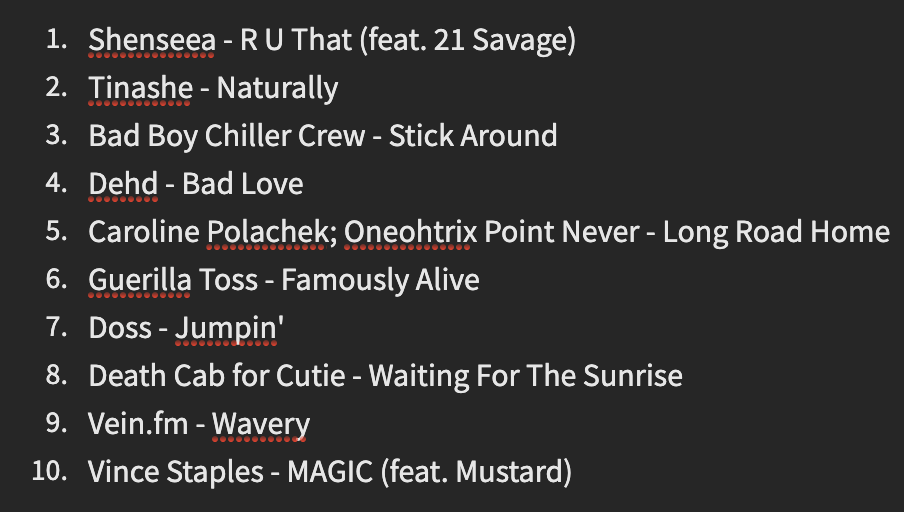
Dehd – Bad Love
An exultant lead single from the Chicago band’s forthcoming album Blue Skies, featuring a shimmy-worthy chorus.
Score: 8/10
THICK – Love You Forever
The all-female Brooklyn band is back with a wayward rocker, an excellent follow-up to the sly “Mansplain” from 2020.
Score: 7/10
Tinashe – Naturally
Tinashe continues to make ridiculously enjoyable bangers; this one follows last year’s 333 with a loping beat and the vocalist’s usual swagger.
Score: 8/10
Vince Staples – MAGIC (feat. Mustard)
Last year’s criminally overlooked self-titled effort saw Staples getting more personal over increasingly minimal production, so this laid-back collab with the less-is-more Mustard makes sense.
Score: 7/10
Silk Sonic – Love’s Train
It seems like an eternity since the debut album (it’s only been a few months) so this surprise Valentine’s gift from Bruno and Anderson, a Con Funk Shun cover, is a welcome return, even if it’s just more of the same sexy 70s pastiche.
Score: 7/10
Death Cab For Cutie – Waiting For the Sunrise
Taken from the forthcoming Yoko Ono tribute album, “Waiting For the Sunrise” finds Death Cab melding soaring harmonies with quirky rhythms.
Score: 7/10
vein.fm – Wavery
“Wavery” is a dread-inducing sample from the band’s upcoming album, akin to a pristine Deftones deep cut.
Score: 7/10
Kurt Vile – Like Exploding Stones
The indie folk journeyman returns with 7 minutes of more of the same lackadaisical, half-sung psych. We’ve heard this before, and so the mind will drift away from the song after a while. Vile himself sounds bored, and that’s saying something.
Score: 6/10
Pink Mountaintops – Lights Of the City
Stephen McBean’s evolving project returns after 8 years with a new forthcoming album and this lead single, a glam-psych hybrid with a guitar line predestined for action movie montage greatness.
Score: 7/10
Doss – Jumpin’
A throbbing, relentless return single from Doss, who wowed me last year with “Look” and “Strawberry.” This one’s designed for peak euphoria in the nightclub.
Score: 7/10
Guerilla Toss – Famously Alive
The Boston dance punks continue their album rollout with a short but sweet, Auto-Tune soaked headbanger.
Score: 7/10
Flock of Dimes – Pure Love
With this new track Flock of Dimes have finally hit all the right spots in their unique approach to indie pop.
Score: 7/10
Troye Sivan & Jay Som – Trouble
With help from the underrated Jay Som, Sivan returns to his melodic glory days, delivering a song as good as anything on the compelling Bloom.
Score: 7/10
4s4ki, gu^2 – Punish
Japanese hyperpop artist 4s4ki reveals multiple layers of their approach on this song, featuring a drum’n’bass breakdown that follows a sweet, crooning verse.
Score: 6/10
Tame Impala – The Boat I Row
A new one-off track from the recently dropped The Slow Rush B-sides compilation, a by-the-numbers Tame Impala arrangement that Kevin Parker could write in his sleep.
Score: 5/10
Kid Cudi – Want It Bad (feat. Nigo)
Cudi’s latest drop is pretty mid, not gonna lie; an incessant beat guides the rapper along toward a typical play at the Top 40 with an unmemorable chorus.
Score: 5/10
Jack Harlow – Nail Tech
Harlow’s cocky flow has always been appealing, but the hook here just isn’t as strong as previous singles.
Score: 6/10
SEBii – stfu… ur done
A playful hyperpop kiss-off with a fun mix of gibberish and pulsating, fist-pumping percussion.
Score: 6/10
Shenseea w/ 21 Savage – R U That
Fresh off her collab with Megan Thee Stallion, Shenseea drops another bop. Bonus points for throwing the best ad-libber doing it right now, 21 Savage, on the track. This shit goes hard.
Score: 8/10
Nilufer Yanya – anotherlife
Another enticing sample from the art pop artist’s new album Painless, “anotherlife” shimmers with an oscillating beat and ethereal production.
Score: 7/10
Fontaines D.C. – I Love You
“I Love You” is an overlong, moody endeavor from the Irish post-punk rockers that isn’t nearly as interesting as the band clearly thinks it is. If this serves as the centerpiece for their new album, that spells trouble.
Score: 5/10
93FEETOFSMOKE – FUCKED OVER (feat. phem & Tosh the Drummer)
This was a standout when I was perusing the latest wave of pop-punk revival tracks a few days ago, but over time the sweet-as-candy hook and trap beat drops started giving me a toothache.
Score: 5/10
gabby start – rock music
The first track from Chicago artist gabby start’s new EP luca is an accessible, emotive, glitchy journey into where an Extremely Online subgenre like hyperpop could be headed for increased exposure.
Score: 7/10
Caroline Polacheck & Oneohtrix Point Never – Long Road Home
Polachek and Daniel Lopatin join forces for this gorgeous left-field arrangement that undulates in all the right moments.
Score: 8/10
Bad Boy Chiller Crew – Stick Around
A highlight from Disrespectful finds the Crew dropping the 90s club and hip house aesthetics for piano-heavy, trap pop, and it works ridiculously well.
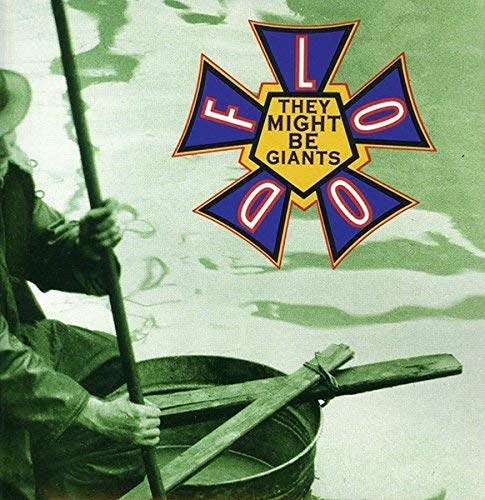
The Johns were always oddballs. Out of all the bands my older cousin Joe introduced to me in my most formative years, They Might Be Giants was the weirdest. But unlike another bizarre group in his CD collection, Primus, TMBG weren’t dark or sinister, but rather playful, quirky, slightly nerdy… ok, they were very nerdy. And the Brooklyn duo, consisting of Johns Linnel and Flansburgh, were also kid-friendly, which led to placement on Tiny Toon Adventures, and, eventually, children’s albums from TMBG themselves.
Flood is, by a long shot, their most successful and recognized album, though the jury’s out on whether it’s their best. They Might Be Giants albums are a bit of a mess. A fun mess, sure, and always an adventurous, diverse listen, but a mess nevertheless. Flood is no different, featuring dalliances with country and Western music, polka, and and oldies-era rock’n’roll.
There’s plenty of quirky arrangement here, as well. Lead single “Birdhouse In Your Soul” has a trumpet solo, and, thanks to the marvel of MIDI sequencing, injects a rather off-kilter key change. The song is told from the perspective of a night light, which, yeah, sounds about right. They Might Be Giants are perhaps best known for their novel, strange lyrics and imagery, which never quite enter the realm of straight-up comedy or satire.
“Lucky Ball and Chain” is a fairly straightforward heartbreak song, though the Western pastiche renders it a bit too tongue-in-cheek. The duo’s cover of “Istanbul (Not Constantinople)” is likely their best known song, and for good reason; it’s an unbelievably fun baroque pop rendition held together by violin and a good sense of humor in vocal delivery. “Dead” follows, a strangely beautiful and sentimental piano tune about being reincarnated as a bag of groceries.
Only on a TMBG song can clever political commentary, accordion, drum machines, and sudden shifts in genre all combine for a completely enjoyable track, as on “Your Racist Friend.” Fan favorite “Particle Man,” meanwhile, is guided along by an oom-pah cadence and an abstract tale of a group of men (all with peculiar descriptors) who are fighting with each other. “Twisting” borrows a lot from an old school rock’n’roll template, enough that, were it not so… uh, They Might Be Giants-y, it might have been destined for PA systems at baseball games.
Once they get into the swing of things, the duo begins repeating themselves, rendering Flood with a good chunk of filler. The biggest and best moments on the album are the songs we all remember, and the rest come off as a bit corny. This was They Might Be Giants’ first time in a proper recording studio, so the story goes, and the sessions were utilized for a bit of studio experimentation with sampling and vocal effects. Near the middle section of the album, this focus produces some flat-out melodic duds, like the disaster “Hearing Aid” and the eyeroll-inducing interlude “Minimum Wage.” When the Johns focus on building innovating left-field pop melody, as on “Letterbox” and “Whistling In the Dark,” the album truly shines.
Even though it’s their most commercially successful album, Flood has many moments that could have been left on the cutting room floor. At times, the songs feel too undercooked, and at other times downright off-putting. This has been a typical flaw for many They Might Be Giants releases, however, and when the duo gets going here, they deliver some of their career-defining material.
If you had introduced me to Ten instead of Nevermind, I’m not sure I would have jumped into 90s alternative as fervently as I did. That’s not to say I don’t like Ten, or the music of Pearl Jam, music I’ve heard my entire life. I just always had a preference for when grunge was reacting against, rather than building from, classic rock.
Admittedly, because of this approach to their sound, Pearl Jam are a bit of a blind spot for me. I was never drawn to the elongated guitar solos, the self-serious tone, the impassioned timbre of Eddie Vedder (which, through no fault of Vedder’s, slowly became a bit of a caricature thanks to imitators like Scott Stapp). I guess I always liked my rock stars to evoke the nonchalance of Joey Ramone rather than the vivacity of Robert Plant. Putting all this aside for my first proper listen to the band’s debut, Ten, I can attest that the sound is not for me, but it is still an incredibly enjoyable album.
Now, I’ve heard songs like “Even Flow” and “Alive” about a bazillion times, but I’ve admittedly never paid much attention to the lyrics. And by far the most intriguing thing about Ten, to me, now that I’m all ears, is what Vedder is singing about. I was today years old when I discovered the actual story of “Alive,” and I’m doubtless NOT the first person in the world to have this realization. Thanks to the on-the-nose dramatization in the music video, I know all about “Jeremy” (far and away my favorite single from this album), but overall I was surprised at the array of dark topics throughout Ten, like murder, suicide, depression and homelessness.
In terms of the sound of the album, it is very distinct, more or less the template for what became known as Seattle grunge, even more so than the punk-adjacent style of Nirvana. By the time Pearl Jam came together, and Ten was recorded, all the members had cut their teeth in bands like Temple of the Dog and Mother Love Bone. The scene would see its share of tragedies in the decades ahead, but perhaps the members of Mother Love Bone experienced the first of it with the sudden death of Andrew Wood. The trauma is evident throughout Ten’s sullen mood and reverb-layered production. The album, in spite of its massive rock radio appeal, is grunge’s auditory equivalent to a contemplative dirge.
We all know the story: Pearl Jam reacted pretty negatively to the trappings of sudden fame, and retreated almost immediately from the spotlight. Because of Ten’s impact, and its enduring legacy as one of a handful of canonical grunge albums, the band never could truly disappear into obscurity. Based solely on the success of Ten, it is ensured Pearl Jam will headline festivals and stadium tours for decades to come, much like the classic rock icons they emulated so well. Unlike their peers, the band has mostly avoided tragedy and inner turmoil, which has allowed them to soldier on, while Nirvana, Alice In Chains, and Soundgarden have either been forced to call it quits or replace iconic members for second-rate comebacks. Of the Big Four, it is my opinion Pearl Jam are the least interesting, but Ten is still a very good grunge album, and its legacy for reshaping rock is deserved.
When I was in college radio, every on-air shift I had, I played “Making Plans For Nigel.” I played it so much, in fact, that other students started calling me the Nigel Guy, or kept asking me, what was the “Nigel song” I was always spinning? XTC’s lead single from their commercial breakthrough is, to my ears, a new wave masterpiece. The then-nascent gated reverb drum technique (from engineer Hugh Padgham and producer Steve Lillywhite) guides the listener through an odd tempo and a perspective of the titular Nigel’s parents, who are assuring themselves of his future with British Steel. Not only is the single a staple of the then-burgeoning new wave sound, it is an example of XTC’s catchy, but still quirky, evolution to more straightforward pop songcraft.
Building upon the success of the aimless energy of Go 2, the band hired more conventional guitarist Dave Gregory to replace keyboardist Barry Andrews who had departed after an American tour. After the well-received, less angular one-off single “Life Begins At the Hop,” XTC recorded and produced Drums & Wires in just under a month, making a strategic move for more commercial success while staying in the lane of what the group did best.
The oddness is still there, as on the jittery, yelping, Devo-esque “Helicopter,” but the sound is grounded a bit by deftly structured art-rock tracks like “Day In Day Out” and the skank-worthy bounce of “When You’re Near Me I Have Difficulty.” The rivalry of Andy Partridge and Colin Moulding provides a necessary tension and anxiety to the band’s delivery, and only serves to strengthen the songwriting. The hook-filled “Real by Reel” deals with Partridge’s paranoia of government surveillance, while polyrhythmic transitions keep Moulding’s “That Is the Way” unhinged without going off the rails. Things perk up for the punky “Outside World” before the pleasantly menacing “Scissor Man.” Album finale “Complicated Game” tackles Partridge’s existential malaise with a buzzing ambience provided by Moulding (and an actual electric razor).
With Drums & Wires, XTC aimed for loftier goals and a more structured approach, and the success is evident with every diverse, interesting and fun track. While other new wave peers were coming across as maybe a bit more robotic, XTC stood out with their unabashed English sensibility and left-field pop charm.
A hardcore rock opera? Sign me up. Midwest punks Hüsker Dü set the blueprint on fire with their second album in 1984 and decided instead to craft a concept album about a kid who leaves home, joins the military, dabbles in spirituality, finds love, gets his heart broken, and ultimately discovers the world kind of sucks (which, wow, that’s pretty much American Idiot in a nutshell).
The buzzsaw guitars and rapid-fire bass lines are all here; this is still most definitely a hardcore album from the 1980s. But underneath the surface is something more tuneful and melodic, and underneath that still is an earnest narrative about growing up and the realization of the harsh reality of life. Bob Mould and Grant Hart, not yet nemeses, brew up a fascinating pot of driving alt-rock noise, with dalliances in piano, psychedelia and even acoustic folk. These experiments were unheard of for a band of their ilk at the time, which is a testament to Zen Arcade’s influence on modern genre-hopping post-hardcore acts like Turnstile. The album sounds like it was quite a laborious undertaking, rendering the reality all the more impressive: the band recorded most songs in one take, and the whole thing was completed in about four days.
The band’s harmonies consistently hit the mark, as on acoustic rocker “Never Talking To You Again;” elsewhere, an in-reverse mindfuck interlude (“Dreams Reoccurring”) segues into the fast-tempo “Indecision Time.” We are treated to some far-out Bo Diddley action on “Hare Krishna,” while the band channels just a taste of 70s glam on “What’s Going On.”
The diversity of styles makes for an engaging listen, even if some moments fall flat, as on aggressive filler like “Pride” and “Masochism World” and the pointless psych excursion “The Tooth Fairy and the Princess.” However, critical moments in Zen Arcade’s timeline are also late-album highlights: the tuneful “Pink Turns To Blue” is the moment when our protagonist loses his romantic interest to a drug overdose, and the eternally prescient “Turn On the News” serves as a harrowing return to reality. By the time we realize the entire story was all a restless nightmare, the album closes with the 14-minute instrumental reprise “Reoccurring Dreams.”
Zen Arcade, originally a double album on vinyl, runs a little long, and some ideas don’t quite stick the landing, but the project is admirable because of its flaws, not in spite of them. Pardon the cliche, but the album is truly greater than the sum of its parts. Hüsker Dü swung for the fences and mostly hit it out of the park with this one, and the transformation was just beginning.
“Summer Babe (Winter Version)”, the first song on Slanted & Enchanted, the debut album from Pavement, is a perfect introduction to the slacker rock of the band, initially a three-piece that belted out a catchy concoction of nonchalant noise. At first, the distorted guitar and drum mix is reminiscent of Smashing Pumpkins, a similarity that is humorous in retrospect, given Pavement’s mini-feud that would ensue with the Pumpkins later in the decade. Once Stephen Malkmus’ shrugging, Lou Reed-like vocals come in, it’s clear, however, this is not a Billy Corgan creation.
However lethargic Malkmus sounds, his voice leads the way throughout Slanted & Enchanted, stopping his carefree drawl occasionally to deliver a half-hearted “lalala” as on “Trigger Cut/Wounded Kite at :17” or a brief howl, as on the refrain of “No Life Signed Her.” The lyrics are just as noncommittal, a half-winking, half-genuine abstract mess delivered sardonically, consistently.
It’s important, however, not to focus on the presentation too much, because it is all extremely beguiling. Pavement, over the course of the 90s, earned a reputation for making incredibly good music sound like easy work. But anyone listening will recognize the monster hooks hidden beneath low grade production and apathetic posturing. One clear example early on in the album’s runtime is the undeniable melodic hook on “In the Mouth a Desert.” “Zurick Is Stained,” later on, trades in the fuzz for twang and lackadaisical strumming; the sturdy song craft remains, however. Pavement even try their hand at a shout-along stomper via “Two States” before returning to the California indie haze in “Perfume-V.”
Even if the disorganized guitar riffs, haphazard drumming, or Malkmus’ vocals grate at the listener initially, underneath there is structure and warmth to be discovered, which gives the album a repeat-worthy, ageless glow. It has allowed Slanted & Enchanted to stand the test of time; it sounds remarkably modern, even thirty years later.
This has been well documented elsewhere, but the 1990s were a great time for music and music lovers, particularly for fans of rock music. Pockets were deep, and labels were flush with extra cash to spend on more experimental acts and new sounds. Back when “alternative” meant something a bit more substantial than a slightly off-kilter but still homogenous radio format, you never knew what you might hear (or see on 120 Minutes) next.
The Breeders, PIxies bassist Kim Deal’s side project turned main outfit, were a significant band in this era, and they did their part to keep heads turning with their landmark album Last Splash. Deal and her twin sister Kelley were not afraid to mix things up in the studio, incorporating unusual instrumentation and playing with genre. The result is 40 minutes of genuinely thrilling alt-rock.
“Cannonball,” of course is the biggest track here, a start-stop, quiet-loud wallop of distortion, gliding bass lines and infectious melody. It’s easily one of the greatest songs from its moment in rock music. After the sturdy violin accompaniment on “Invisible Man,” we are treated to a dabbling of surf music on “No Aloha,” followed by the psychedelic “Roi.” Each dalliance is supported by strong hooks, and no song is long enough to wear out its welcome. The band’s live energy shines through on instrumental interlude “Flipside”; elsewhere, “I Just Wanna Get Along” is spoken-word pop punk, while twangy Ed’s Redeeming Qualities cover “Drivin’ on 9” hints at the Deal twins childhood love of The Everly Brothers.
The dynamic twins Kim and Kelley Deal, who had been making music together since they were kids, brought all their chops they honed in Dayton, Ohio, to The Breeders, and the band is now known as one of the best of all time. And their classic album, Last Splash, is still a guitar-heavy wonder to behold.
In hindsight, Slipknot is the genre of metal taken to its most logical next step, but that still doesn’t explain its commercial success. The nine-piece (!) Iowa band, all donning homemade horror masks and wearing red jumpsuits, is the gimmicky excessive endpoint for a style of music that had reached its critical nadir with the rise of nu-metal in the late 1990s. The band looked absurd, a walking, screaming punchline for haters of the genre and where it was headed. But in the end, the truth will out, and the truth is that the music of Slipknot fucking rips. This is no more evident than on arguably their best album, the self-titled debut they dropped in 1999.
Even before Fred Durst was hopping around on plywood at Woodstock 99, nu-metal was already showing its hand: an over-reliance on a stale regurgitation of moods, aggro lyrics, and D-tuned riffs. Slipknot, by contrast, were a slight deviation; they were more interesting than the next Theory of a Deadman or whoever. It isn’t necessarily Corey Taylor’s vocal delivery (which is varied and impressive, but not really unique) or his nihilistic lyrical themes, but rather his backing band, who incorporate the then-trendy rap metal tropes and adorn them with industrial, thrash, and death metal sounds. Taylor at times will moan like Jonathan Davis; other times he’s rapping like Papa Roach’s Jacoby Shaddix, before screaming like Phil Anselmo. Meanwhile, the percussion pummels, the start-stop guitar riffs transfix, the turntable scratches jolt. There are traces of other bands before them, but Slipknot’s energy is trademarked.
This is probably why the album, and Slipknot’s sound in general, has aged so well; it was more aggressive, less downtrodden and more authentically angry. It perfectly encapsulates the feeling of a chaotic Slipknot live show (a testament to producer Ross Robinson’s skills). It broke with trends just enough to attain contemporary success and still sound fresh decades later. And it doesn’t hurt that the album inspired a new generation of rockers to build upon the sound, evolving subgenres like metalcore in the process.
Meat Loaf – I Would Do Anything For Love (But I Won’t Do That)
Before we begin, I must stress something important: if you’re only listening to the five-minute single version of this song, you are, yes, saving seven minutes of your life for other tasks, but doing yourself a disservice ultimately. The music of Meat Loaf and Jim Steinman, as any pop historian (or just general fan of auditory histrionics) will tell you, is meant to be heard in all its overproduced, overdone, ridiculously theatrical, self-indulgent glory.
When I say glory, I mean it. Glorious is the perfect word for the two brilliant albums from this duo, Bat Out of Hell and its sequel (the latter of which houses the song we are discussing). But “I Would Do…” is a special moment, even for these two. Throughout, Steinman’s unchained combination of background choral arrangements, banging piano, Richter Scale-challenging drums and screeching guitars collide with Marvin Lee Aday’s emotional, pleading voice, the aural equivalent of witnessing a volcano explode.
By the time the song retreats for a back-and-forth from Aday and Patti Russo, we get an answer to what “that” is that Meat Loaf won’t do. You see, he would do anything for love, but he won’t consider it all a fling or a brief interlude or eventually start screwing around. No, he won’t do that.
Lyrically, it’s simple and poignant, and could all be explained in under five minutes. But then, it wouldn’t be Meat Loaf and Jim Steinman. And whatever you would’ve done for those remaining seven minutes wouldn’t have been nearly as interesting.
Score: 8/10
Janet Jackson – Again
I recently wrote about the sexy vibe that was #1 janet. single “That’s The Way Love Goes,” a song that ushered in a more sensual, mature era for Janet Jackson. The other side of that coin is expressed on “Again,” a sappy ballad that was written for her film debut Poetic Justice and sung in character. “Again” is a longing love song for Tupac Shakur’s character in the movie Lucky, sung by Jackson’s character Justice, and it bores me to tears.
I’ve never seen Poetic Justice, the John Singleton-directed follow up to Boyz In The Hood. Hell, I’ve never seen Boyz In The Hood. These are bucket list movies for me, as we all are wont to play catch up to consume the content that was made before we were old enough to take it all in as it was happening. But even though I’ve never watched Jackson’s lead acting role, I’ve heard good things. The song she delivered for the movie, however, is pretty standard movie soundtrack fare, nothing like what we had come to expect and enjoy about the boundary-pushing pop of her other music. Maybe I’ve just been spoiled on Control and Rhythm Nation, but I don’t think a Janet Jackson song should sound like “A Whole New World.” It just feels very broad to me, and Janet has always had too much of a singular identity for that.
Score: 4/10
Mariah Carey – Hero
“Hero” was the second single from Mariah Carey’s smash, ballad-heavy album Music Box. This was deep in her Tommy Mottola era, when her husband / manager was calling the shots. The song was originally written (by Carey and Walter Afanasieff) for a soundtrack to a forgotten Dustin Hoffman film, and Gloria Estefan was supposed to sing it. Mottola, upon hearing the song, demanded Mariah sing it instead for her new album.
Despite Carey’s athletic vocal takes, “Hero” is a schmaltzy, weepy nothing of a song, and that’s mostly the fault of Afanasieff, whose generic piano and thunder-drum arrangement is as predictable and safe as a C-grade Hollywood film. Carey, for her part, gives just the right amount of emotional oomph to lyrics that signify pretty much anything you want them to, whether it be a tribute to fallen heroes, or a retiring professional athlete, or a charity event for a poverty-stricken community. The song works as a go-to for anything, really, because the lyrics are so vague, almost to the point of being comical. “Hero” is one of Carey’s best-known songs, and it’s a live staple, and there’s no doubt it’s brought comfort and inspiration to millions. And of course that was the whole point. It was designed for universal application. But the song’s fill-in-the-blank approach also renders it banal and boilerplate.
Score: 4/10
NEW MUSIC
Barrie – Jenny
Another pleasant advance single from the dream pop group, whose new album Barbara drops in March.
Score: 7/10
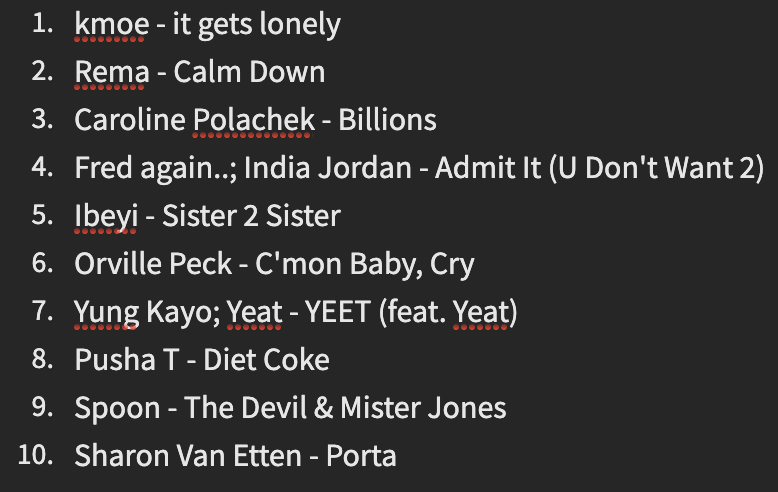
Sharon Van Etten – Porta
Sharon Van Etten’s yearning voice soars over a cascading wave of synths and rolling drums, drawing comparisons to The War On Drugs’ more thunderous work.
Score: 7/10
Helena Deland – Swimmer
Helena Deland delivers a tender ode to a vital memory over plaintive guitar strums. It’s pretty, but hardly as captivating as recent accolades would suggest.
Score: 6/10
Real Lies w/ Zoee – An Oral History Of My First Kiss
Wistful synth tones and steady electronic claps envelop a spoken-word monologue of memories and cooing female vocals. The song builds to something greater than the sum of its parts.
Score: 7/10
Excide – The Portrait, Now Perceived
American post-hardcore crew Excide have returned with a driving new single that takes a breath only for a shoegaze-like chorus before returning sharply to pummeling rhythms.
Score: 7/10
Fawn – Graffiti In the Hall
A random indie-pop artist with exactly one song on Spotify, but it’s a very pretty one, featuring a steady kick drum alongside guitar strums and a very catchy throbbing synth line.
Score: 7/10
Caroline Polachek – Billions
Polachek lets her voice take the lead on this new single, a bit more understated than the previous “Bunny Is A Rider” or her recent uptempo work with Charli XCX.
Score: 8/10
Pusha T – Diet Coke
Kanye produced this new jam from Pusha, proving even in 2022 (and amidst continuous drama on social media for the former) both of these veterans can still bring the goods.
Score: 8/10
fred again…. w/ India Jordan – Admit It (U Don’t Want 2)
Two of my favorite producers of the past few years collab on this new, nocturnal, pulsating track, perfect for the ride home after the sensory overload of the nightclub.
Score: 8/10
Willie Nelson – I’ll Love You Til the Day I Die
Preparing once again for a new album, the legendary octogenarian never stops working. He returns with a tender, if a bit bland, love song, incorporating his famous warbling croon.
Score: 6/10
Drug Church – Premium Offer
Drug Church hearken back to Bob Mould’s style of loud 90s post-punk on this recent leak, albeit with a Pixies-influenced haze blanketing everything.
Score: 6/10
Ibeyi – Sister 2 Sister
The French twin sisters score big points with this new track, a sort of mission statement for the duo and their music.
Score: 8/10
Rema – Calm Down
The Nigerian dancehall artist returns with another hook-filled leak from their upcoming Rave & Roses album.
Score: 8/10
Nicki Minaj & Lil Baby – Bussin
While a slight improvement from the clumsy “Do We Have a Problem?”, this new collab from Barbie and Baby is still missing the ingredients that make each of them so captivating separately.
Score: 5/10
Orville Peck – Cmon Baby Cry
The finest of a batch of new songs from the forthcoming Bronco, “Cmon Baby Cry” has the boot-shufflin’, singing-to-the-heavens bliss we’ve come to expect from the queer country troubadour. This one will get people two-steppin’ better than anything Nashville is cooking up these days.
Score: 8/10
Real Friends – Tell Me You’re Sorry
The Illinois-based emo heroes return with a by-the-numbers pop-punk track that will satisfy longtime fans but gain no new recruits.
Score: 5/10
Slayyyter – Troubled Paradise/Inferno Euphoria (Not a Friend Remix)
This high-energy remix combines the title track from Slayyyter’s previous LP with a new song, destined for floor filler euphoria on your next Friday night.
Score: 7/10
Mary J. Blige w/ Anderson Paak – Here With Me
Blige sounds a bit out of her element on this generic funk-based beat, while Paak sounds right at home. Results are mixed overall.
Score: 6/10
kmoe – it gets lonely
When the beat drops on this skittering, shimmery hyperpop nugget, it’s like biting into your favorite flavor of Skittle. Let the dopamine hit.
Score: 9/10
patchnotes – Baby
On the other side of the hyperpop spectrum, patchnotes conjures a chillwave vibe that also evokes lo-fi beats you can study to, equal parts theatrical and pensive.
Score: 7/10
flowerovlove – I Love This Song
Speaking of vibes, this one’s got some – a steady, swaying pop song that never reaches for the rafters, but rather remains content in its lane. Hard to explain, but you’ll know when you listen.
Score: 7/10
Kim Petras – XXX
The best track on an otherwise disappointing sex-themed EP that sacrifices gratuitous content for good dance pop songs. “XXX” is an example, but the beat here is stronger than what’s on the rest of the project.