I lived in Austin, Texas, for ten years. Trail of Dead are a band from Austin, Texas. And I suppose, based on my cursory listen to their most acclaimed album, that’s probably the only thing we have in common. Band member Conrad Keely has said that some songs on Source Tags & Codes are about the joy of living in Austin in the 90s, surrounded by night life revelry and people on illicit substances. I am happy to report I did similar things two decades later, walking the same streets, doing the same drugs. So I’m fairly surprised that, based on that experience, this is what the band came up with.
I know artists draw inspiration from everywhere, not just their surroundings. Sonically, it’s clear they weren’t influenced by the sounds of Central Texas. That’s fine, because generally speaking, neither am I. But I guess I’m just nonplussed by sullen, and how unimaginative the whole affair feels.
The music on Source Tags & Codes is not the music I would have come up with. It’s not even that I likely wouldn’t produce a Sonic Youth type of dissonant, dour indie rock. That much is true, but it’s beside the point. It’s that Austin is great city, where great memories are made. The city inspires, if not great music, at least memorable music. At best, you get the pristine, minimal indie chops of Spoon. At worst, you get boring AAA Grammy bait like Black Pumas. But Trail of Dead fall somewhere in the middle, and that might be even worse – with Source Tags & Codes, the band made a fairly unmemorable collection of songs. It’s 45 minutes of morose mid-aughts indie rock that washes over the listener
I will say this about Source Tags & Codes: it keeps the listener engaged through a variety of approaches to the same general sound. “Another Morning Stoner” has the most memorable melody on the entire album. “Baudelaire” is angsty and angular. “Homage” is aggressive. “Heart In the Hand of the Matter” has some piano in there. But overall, the mood remains the same – it’s all a bit joyless, a bit unimaginative, and a bit indistinct. The end result leaves no lasting impression, which renders this writer a bit shocked, considering the heap of praise it received back in 2003. Perhaps it’s a matter of taste, but I find myself to be of an open mind, particularly in the realm of indie music. And Source Tags & Codes bored the hell out of me.
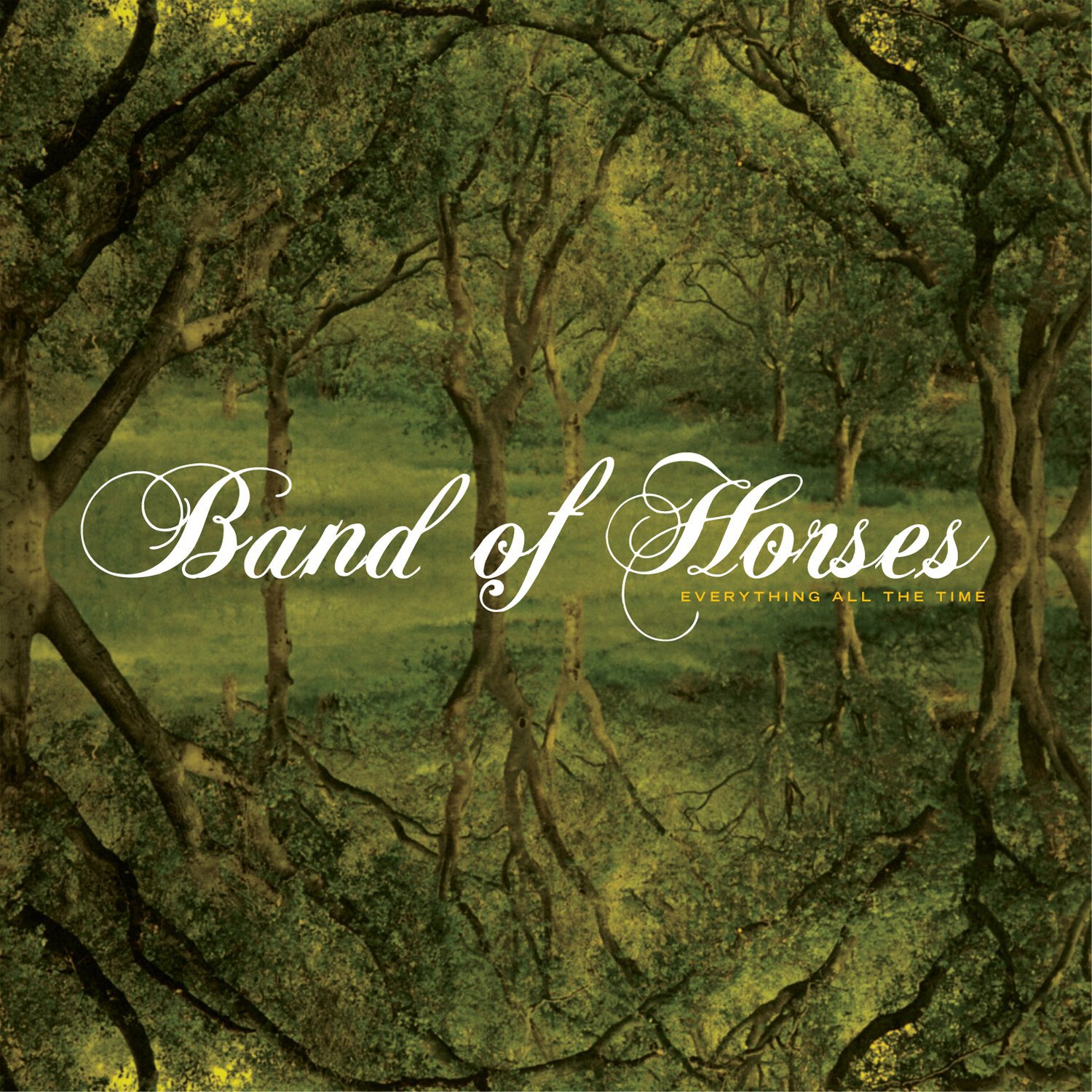
One listen to Everything All The Time, and I know that I should have listened to it sooner. Specifically, I should have listened to it in college, when it was fairly new. The debut album from Band of Horses would have aided my recent heartbreak from my high school sweetheart; its twangy, sun-soaked melancholy would have contributed positively to the soundtrack to my coming of age, as I danced in dingy bars in Lubbock, Texas, drunk off the cheapest beer on the menu.
Instead I discovered the band through their sophomore album Cease To Begin, which I still find to be the superior of the two. By then, the majority of the band had left Ben Bridwell to his own devices, and he evolved the group’s My Morning Jacket-aping tendencies into something more distinct, earnest, and effusive. By contrast, Everything All The Time finds Band of Horses beginning to develop their Southern-tinged heartland indie bona fides, with occasional moments of sheer brilliance, as on all-timer “The Funeral.”
Bridwell’s yearning yelp understandably draws comparisons to Jim James, as his band incorporates steady mid-tempo rhythms and resonant guitar plucking to great emotional effect. The project tends to drag in the second half, with the exception of “Weed Party,” a wistful rocker about getting into youthful trouble.
Band of Horses certainly found their lane with the follow-up, then almost immediately lost the plot for the next decade, as their signature sound devolved into nondescript coffeeshop rock. The early stuff, however, still has the tendency to tug at the heartstrings.
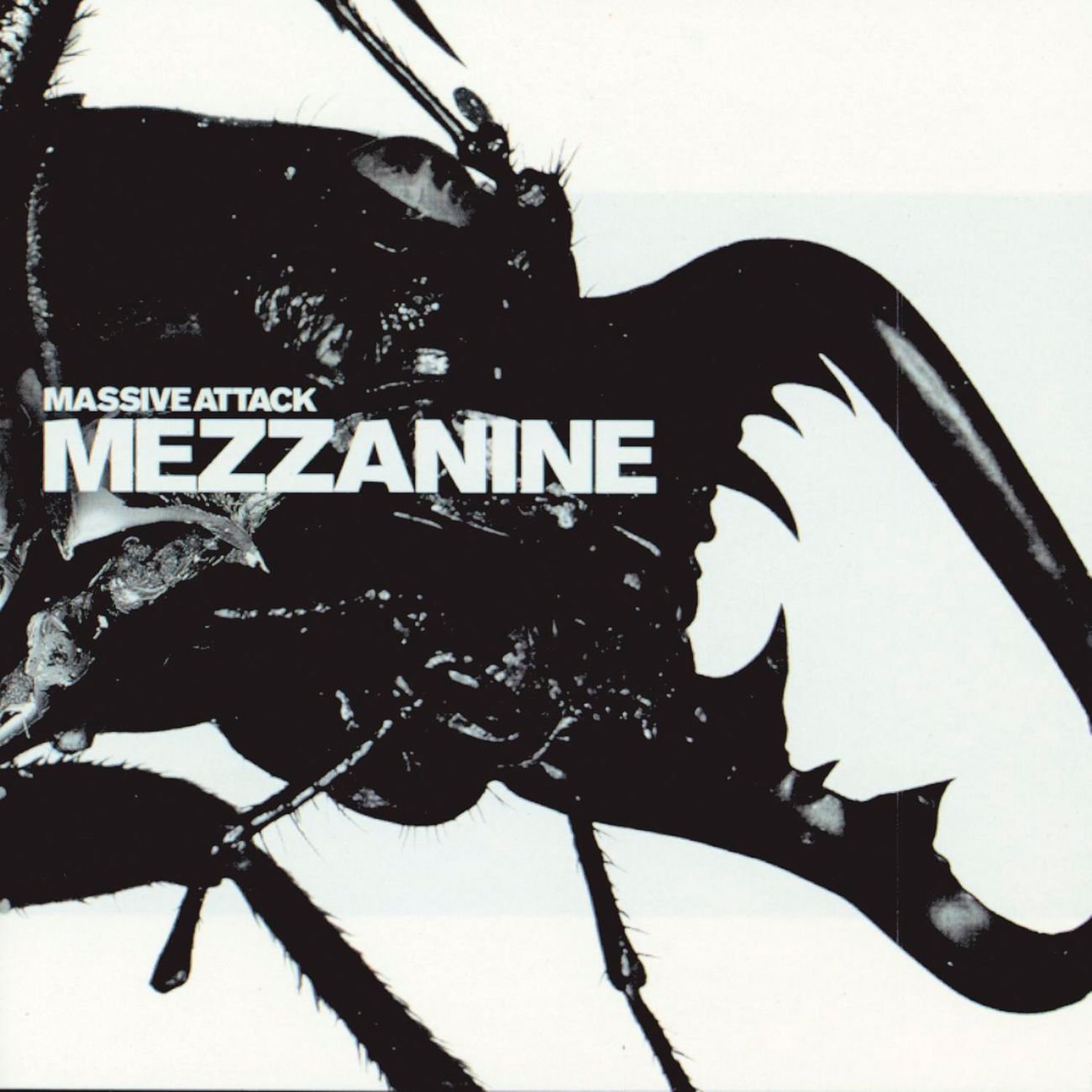
A whole wave of eerie trip-hop entered the public consciousness, particularly in the UK, thanks to Massive Attack. When a modern listener hears Mezzanine, arguably the group’s landmark album, for the first time, they might conjure mental images of the X-Files movie or Neo and Trinity running down a dark hallway in trench coats. The ubiquity of this sound ran rampant so prominent to become a cliche, but the influence of Mezzanine cannot be ignored.
Opener “Angel” sets the tone for the album, a fairly major departure from Massive Attack’s jazzier approach on previous efforts like Protection and Blue Lines. The song is an ominous, slow build, and an eerie vibe is established for what’s to come. “Risingson” features smoky atmospherics, record scratches, and raspy rapping from Robert Del Naja and Grantley Marshall. The track features a Velvet Underground sample, a practice Massive Attack liberally continue on Mezzanine.
For my money, the best song on the album is “Teardrop,” perhaps because I’m a fan of the television show House, which used the song for its opening title sequence, and also perhaps because I’m a fan of Jose Gonzalez, who does a creepy acoustic cover of the track. These usages aside, the song stands on its own as a gorgeous, layered centerpiece for the album, evoking a dark wave of synths and subtle electronic snare hits over the listener’s ears, as Elizabeth Fraser’s haunting vocals wash over everything. If “Teardrop” isn’t the moment of conversion for any skeptic, then “Inertia Creeps” should do the trick; the song is a barrage of crawling electronic sounds and enveloping ambience, surrounding whispery rapping. The track feels as if it’s building to something more explosive, maybe more terrifying, but the moment never comes, giving “Inertia Creeps” a delightfully anxious mood.
In the second half we are treated to encroaching Reznor-esque guitars and Sarah Jay Hawley’s ominous vocals on the trip-hop-flavored “Dissolved Girl,” while “Black Milk” is a dark, Manfred Mann-sampling blanket of late-night disquiet. The formula wears a bit thin on the cover of “Man Next Door,” which doesn’t contain quite the same harrowing vibe as the rest of the album.
The mood of Mezzanine still haunts decades later; it’s a collection of goosebump-inducing unease that also functions as a successful foray into a new sound for the influential electronic group. Massive Attack reportedly were not getting along during the recording of the album; perhaps that discomfort crept its way into the cracks of Mezzanine, as every song follows a pattern of pleasant instability, like watching a wonderfully sinister thriller. It’s no wonder the sound permeated throughout the landscape of foreboding films and television shows. Even now, it still makes the listener’s hair raise.
It’s interesting that The Wrens took four years to make The Meadowlands, because it probably showed up at just the right time. Almost 20 years ago, indie rock was having a Renaissance moment, as the Internet exposed a larger audience to an array of sounds from the underground. It should be noted, as has been mentioned elsewhere in recent years, that these sounds were mostly from white men who played guitars, and that the people writing and giving critical acclaim to these bands were also white men.
In the context of The Meadowlands, that’s important; while it’s clear the critical establishment would be interested in a new Wrens album in 2022, it almost certainly wouldn’t receive the universal praise that was heaped upon the band in 2003. We know this because it’s basically already happened: little buzz was made about Kevin Whelan’s solo album in 2021 under the name Aeon Station, and while the release was met with generally favorable reviews, the album came and went. You could chalk that up to our collectively shortened attention span, or that the album just wasn’t as good as anything The Wrens put out, but I think the biggest factor is that, two decades later, indie music and the people who write about it have changed greatly.
Given this context, The Meadowlands should seem like a bit of a relic. Plenty of its peer albums that received critical acclaim have been lost to CD dustbins and the Pitchfork archives. But actually, the final album from The Wrens still feels fresh. The band produced an hour-long treatise on melodic, literate rock that still has the power to provide a healthy dose of catharsis.
The album opens with a gradual build of melodic guitars and crescendoing vocals via “Happy,” all before a satisfying instrumental breakdown near the end of the track, heavy with echo pedal-saturated riffs. One can only imagine what this song sounded like at The Wrens’ now-legendary energetic live shows, one of which I was lucky enough to have attended at SXSW 2008. We are later treated to “This Boy Is Exhausted,” featuring in-the-pocket harmonies and agreeably jangly chords.
The album ebbs and flows from contemplation rock to high-energy stompers. “Faster Gun” is a slice of heavenly Sebadoh-esque power pop heaven that I actually remember hearing in high school on WOXY.COM (RIP), only for the album to shift once more to the gorgeous slow tempo track “Thirteen Grand.” The album isn’t without its instances of filler, like the repetitive “Hopeless” and the dragging “Boys You Won’t,” but taken in the context of the full project, every piece is a journey in thoughtful song construction, and sharply crafted melody is featured throughout.
Things get louder and doused in distortion for the one-two punch of “Per Second Second” and “Everyone Chooses Sides,” the latter sounding like a gratifying Robert Pollard jam. The album closes with “13 Months In 6 Minutes” and short piano outro “This Is Not What You Had Planned,” the former song a tranquil, yet magnetic reflection that evokes the twang of 1990s Modest Mouse.
Even decades later, The Meadowlands serves as a masterclass in rewarding, sprawling statements set to guitars and drums. The narrative might have shifted, but the music remains, and it’s still wholly enjoyable.
With just the right combo of suave, sophisticated, and a little weird, Aaliyah’s second album showcased the maturity, growth, and strength she brought to her music. In the aftermath of a split from future convicted sex offender R. Kelly and Jive Records, Aaliyah did a full 180 and transformed her sound into something simpler and more sensual. The results were legend-making.
The superstar duo Missy Elliott and Timbaland open the proceedings with just a taste of what they were cooking up for the following year’s Supa Dupa Fly. The pair continue setting the vibe with “Hot Like Fire,” a smooth funk track designed for Aaliyah’s charismatic vocals to glide over. In fact, Elliott and Timbaland have co-write credits all over the album, with the latter behind the boards for a majority of the album’s 70-minute runtime. This gives One In A Million a sophisticated, yet slightly off-kilter mood throughout. This is perhaps best embodied in the album’s title track; laid-back synths accompany skittering, but subtle percussion, never upstaging the understated, coy declaration of romantic contentment from Aaliyah.
The vibe pivots slightly when Naughty By Nature’s Treach shows up for a feature on “A Girl Like You,” featuring a pleasant boom-bap that doesn’t bang too hard; the song reveals Aaliyah’s versatility and ability to switch up her flow. We hear other transitions, from her take on an Isley Brothers slow jam, to a “Billie Jean” sampling Marvin Gaye cover with Slick Rick in tow, to the streetwise swagger of “Everything’s Gonna Be Alright,” to the Jermaine Dupri-produced “I Gotcha Back.” In all of these, Aaliyah remains poised, her voice leading the presentation without missing a beat.
The long duration of One In a Million, with a fair share of filler, is really the only thing that hampers the overall experience. Aaliyah’s sophomore effort, as a whole, is a measured, enjoyable piece of 90s R&B from a formidable artist who was just beginning to find her footing after a tumultuous entrance into the industry. She rebounded from the drama quickly and let the music do the talking. And before she left us too soon, she would change the conversation again.
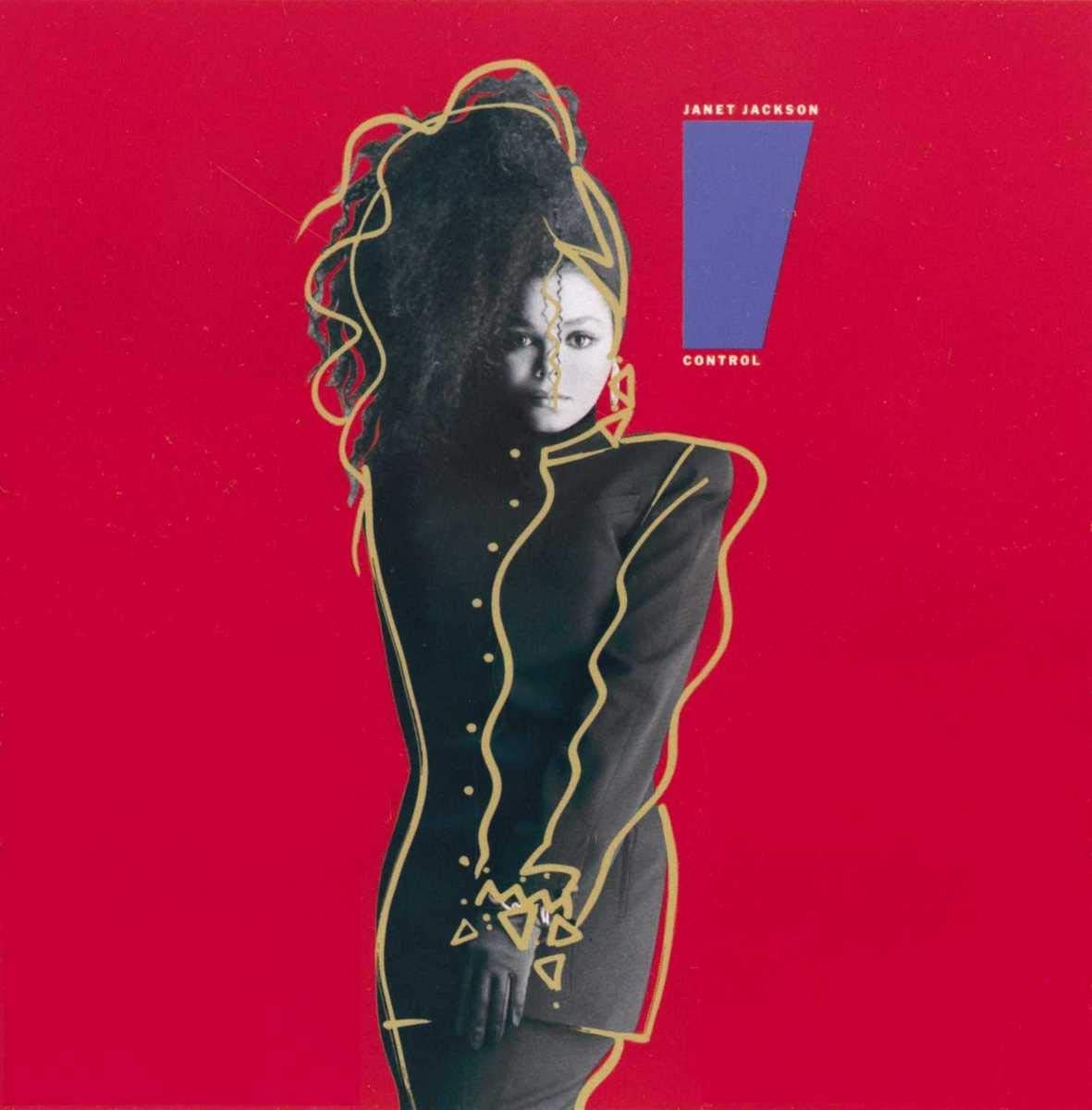
l’m not sure if I want to make the argument here, because I’m not sure of where I stand on it… but you could definitely make the case for Janet being the superior Jackson. After all, Janet never faced the inevitable downturn most pop stars face; even the King of Pop, her brother Michael, eventually started seeing diminishing returns on the charts. No, actually the thing that prevented Janet from continuing her hitmaking streak was an undeserved backlash to a wardrobe malfunction, a reaction that in hindsight seems tinged with unfairness and misogyny. If it had never happened, Janet probably would still be selling millions today. She seemingly had no end to her innovation.
That all started with Control, her third album, and the beginning of many things: the first, for Jackson, with the all-star team of Jimmy Jam and Terry Lewis, and the first project independent of her father Joseph’s supervision. It’s also considered a sort of proto-New Jack Swing album, and the first of Jackson’s projects with an autobiographical theme. The title track and first song sets the template – Janet takes charge of the narrative and proclaims that this time, she’s in control. Behind the boards, Jam and Lewis fuse rap, R&B, heavy percussion, funk, and an amalgamation of other disparate sounds they honed under the guise of Prince and his team at Paisley Park.
From there, the beat goes on, as does Jackson’s dynamic presence: “Nasty” and “What Have You Done For Me Lately” are a one-two punch of Top Ten singles that speak to female agency and independence. Control is an overwhelming treasure trove of infectious hooks – even when the trio play it somewhat safe, as on “Pleasure Principle,” the end result is still a disco-tinged, guitar solo-laden dose of fun. Elsewhere, when Jackson makes the decision to turn down the assertion and coast into a fun love song, as on “When I Think of You,” a strutting bass line and synth stabs accompany her playful cooing over a danceable post-disco shuffle. The album slows down the tempo near the end via the single “Let’s Wait Awhile,” which upon release was praised for its pro-abstinence message in the wake of the AIDS crisis, and closer “Funny How Time Flies.”
The story goes that before Control, Jackson was underestimated greatly by critics as just a pop star with a notable family name coasting through a series of hits, all of which she had little input. In fact, even when she continued to prove everyone wrong, they still doubted her. In hindsight it seems ridiculous that they ever did; Janet Jackson is unquestionably a pop icon who reinvented her approach several times over, all to great degrees of success. In many instances, she was ahead of the curve, predicting trends years before they dominated the zeitgeist. Control is just the first instance of this happening, when a savvy Black woman changed the whole game and made everyone else look very, very stupid. Some people still haven’t learned the lesson, one Janet has been teaching since 1986.
When we talk about 90s female R&B groups, the go-to is TLC, but I seem to remember SWV were also a pretty big deal. And so I looked it up, and I remembered correctly – they are one of the best-selling girl groups of all time, with over 25 million records sold. And nothing sold better than their #1 smash “Weak.”
Really SWV were just riding a wave – the early 90s were all about R&B, thanks to a subtle update in style from none other than Mariah Carey. The soulful balladry of Whitney Houston was out – the smoothed-out Philly soul and tinge of hip-hop and New Jack Swing was in. And so groups like Boyz II Men, Jodeci, Silk, En Vogue, and, yes, SWV were taking over MTV and your mom’s favorite radio station. The music was in fashion, but unlike its cousin hip-hop, it was relatively safe.
When SWV’s sound became more beat-focused (“You’re The One,” “I’m So Into You,” and the Michael Jackson-sampling “Right Here”), the results were superior, but at this particular moment, they were in the right place with a song like “Weak.” The single is typical of R&B of 1993, with a keyboard chime opener, finger-snapping, solid harmonies from all three members, and just a touch of necessary vamping at the end. The chorus is sticky, particularly the final pause and stanza (“I can’t explain why your love, it makes me weeeeeak”).
SWV had their moment, and they capitalized. The weakest (pardon the pun) of their most memorable singles is the one that got them to the top, but it’s still a decent jam.
Score: 7/10
UB40 – (I Can’t Help) Falling In Love With You
I’m not a big Elvis fan, overall. I appreciate the legacy, but more often than not I’ve found Presley’s voice to be more hiccuping and humorous than beautiful. “Can’t Help Falling In Love” is an exception. When I hear Presley’s version, I see my gorgeous wife walking down the aisle a little too quickly in her beautiful white dress. I was in tears. It’s a moment I will treasure forever.
UB40’s version is a different story. My wife is a giant Elvis fan, but I’ve never asked her what she thinks of the pop-reggae cover that is just as popular as the rendition the King released. She likely doesn’t like it as much. Not for the reasons I don’t; she probably just thinks Elvis does a better job and sings better. She would be correct.
Ok, UPDATE: I just texted my wife and her response is that it sounds like a “Sandals Resort commercial… it’s kitschy and just ew…” and the audio equivalent of a watered-down pina colada. I love this girl, I think she just wrote my review for me.
So never mind, I guess she abhors it for the same reasons I do, after all. UB40’s cover sounds commercial and cynical. It’s an opportunistic stab at an oldie for continued chart relevance; the canned drum machine and overdone horn stabs add to the stale presentation. It’s a reggae pastiche from a reggae cover band whose breakthrough hit was a stroke of pure luck, an unremarkable version of Neil Diamond’s “Red Red Wine” that gained traction after a rogue DJ started playing it on a whim. From that point, UB40’s whole schtick was breezy reggae covers of soul and oldies classics. Their second #1 hit is actually worse; it only gets points from me because it’s actually, in its purest form, a transcendent, romantic, almost dreamy song.
It’s admittedly hard to do an A+ Elvis song justice. But apparently it’s not hard to completely butcher the thing either. Ask my wifey, she knows what’s up.
Score: 3/10
Mariah Carey – Dreamlover
“Dreamlover” has all the makings of a touchstone Mariah Carey song. The hip-hop swagger, the superhuman falsettos (those show up about five seconds in), a sticky-like-glue “do-do-do” refrain, and a dreamy (pun intended) vocal delivery that confidently soars to the heavens. This was the beginning of the Carey we know and adore; while her first two albums conjured big hits, they were all either ballads or a light flirt into trendy house music. Carey’s legacy is that, with her superstar voice, she guided R&B into a hip-hop adjacent period of stratospheric success. “Dreamlover,” arguably, was the beginning of that.
It’s a shame that Music Box, the album that “Dreamlover” came from, doesn’t have more examples of this sound. Tommy Mottola and the record label machine that was controlling Carey’s career wanted her to stay in the lane of balladry, and the majority of her songs in this period go in that direction. Not that Carey couldn’t sing ballads; obviously she could, and can. But she absolutely shines in “Dreamlover,” and the simple fact that the song is a banger doesn’t hurt.
The sampled percussion hits hard on the track, and a Hammond organ adds a nice flavor to the celestial atmosphere; it’s a nice pairing to Carey’s carefree croon. The lyrics speak of a yearning for someone to take her away; it doesn’t really go into details about the person, but rather the focus is the feeling they can provide. The backup multi-tracked vocals on the chorus move the train along, allowing Carey to vamp all over the song in the foreground, which is what we all came for, anyway. The song isn’t the most obvious showcase for Carey’s voice, but she manages to get a few key moments in, regardless.
“Dreamlover” was a huge hit, which wasn’t a surprise. The most exciting thing about it is what it gradually revealed about Mariah Carey’s sound, and the sound of 90s R&B in general. As the decade progressed, this rap-flavored aesthetic would become the norm, and all those ballads would become side dishes, rather than the main course.
Score: 8/10
NEW MUSIC
Hater – Something
A gorgeous, jangly, almost trip-hop track from this Swedish indie rock group I’ve never heard of before this week.
Score: 8/10
Petter Eldh + Koma Saxo – Koma Kaprifol
RateYourMusic describes both of these artists as avant-jazz, but this new track is guided by a very satisfying hip-hop cadence.
Score: 7/10
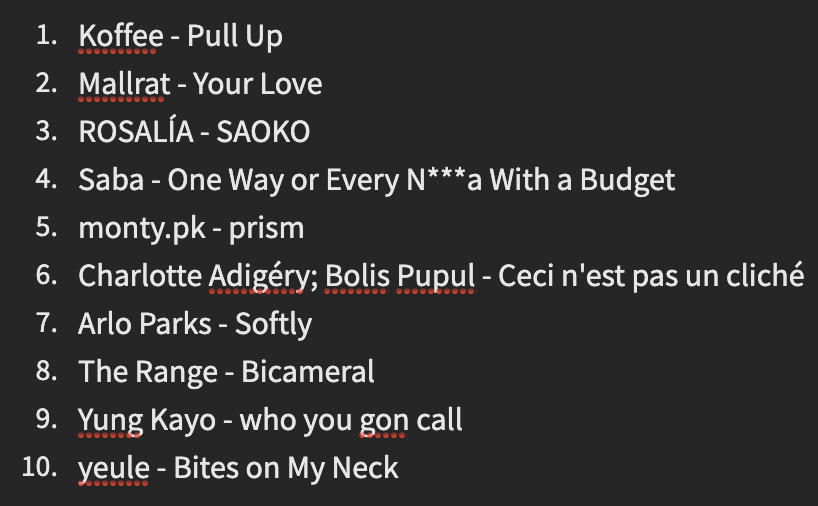
The Range – Bicameral
A rewarding, beatific new single from the Rhode Island-based producer, who we haven’t heard from in a long time.
Score: 8/10
Twen – Bore U
Twen return with a swaying, bouncy track featuring Jane Fitzsimmons’ drawling vocal delivery.
Score: 7/10
My Idea – Cry Mfer
This just feels like a spring day, windows rolled down, arms outstretched, fingers blowing through the wind. That last sentence is a bit broad and also a tinge dramatic, but just listen to the song, you’ll see what I mean.
Score: 8/10
Arlo Parks – Softly
After the acclaimed Collapsed In Sunbeams, the London artist returns with a blissful slice of indie pop.
Score: 8/10
Kamasi Washington – The Garden Path
The jazz fusion artist sends us to new planets with this brass-heavy, percussion-crazy new song.
Score: 7/10
Lucy Dacus – Kissing Lessons
Dacus’ storytelling is as vivid as ever on this new upbeat song.
Score: 7/10
illuminati hotties – Sandwich Sharer
The slow verses build gradually, repeatedly, to a bouncy, clever refrain typical of past releases from the group.
Score: 7/10
Flume w/ MAY-A – Say Nothing
A Latin rhythm provides the backbone to this nondescript track that contains none of the interesting flourishes from Flume’s older work.
Score: 6/10
Mallrat – Your Love
The Australian pop singer continues to get better and better. This song does so much with such a standard hook. The hip-hop outro on this seems like it would be out of place, but it only adds to the excellent vibe.
Score: 9/10
SASAMI – Call Me Home
A decidedly more low-key, pensive track from the upcoming album from SASAMI, whose previous singles have had a more foreboding, almost industrial sheen.
Score: 6/10
Koffee – Pull Up
What a stupid fun song from the dancehall artist, whose forthcoming project Gifted just jumped to the top of my most-anticipated albums for the year.
Score: 9/10
Red Hot Chili Peppers – Black Summer
Forever preserved in stale amber, the Chili Peppers may have their old guitarist back, but it does nothing to progress their sound, other than Anthony Kiedis’ unfortunate new Scottish-pirate inflection.
Score: 3/10
$NOT w/ A$AP Rocky – Doja
This song gets me hype, even though I know it’s not really that good. Chalk it up to the “fuck that! fuck you!” chants.
Score: 6/10
Megan Thee Stallion – Flamin’ Hottie
This product placement cash-in for the Super Bowl is as stale as old Cheetos. Would rather have had the real thing (i.e. Salt N Pepa).
Score: 3/10
King Von w/ 21 Savage – Don’t Play That
Production is mid, hook is too repetitive. Bars are unmemorable. 21’s verse saves the song from being merely mediocre.
Score: 6/10
Metz – Demolition Row
Slightly less noisy and propulsive, but just as eerie as their older stuff. This one has more a creep than an immediate bang.
Score: 6/10
Machine Gun Kelly w/ WILLOW – Emo Girl
A star-studded collab, but after the hype dies down, there really isn’t much to the song, unless you just want a Blink 182 outtake. The chorus is so bad it’s kind of funny, frankly.
Score: 5/10
Kavinsky – Zenith
An underwhelming new song from the French producer that contains none of the mystique of their best work, including the immortal “Night Call.”
Score: 5/10
Rosalia – SAOKO
Rosalia continues to re-invent her style, as on this new monster of a dance track.
Score: 9/10
Nicki Minaj w/ Lil Baby – Do We Have A Problem?
Nicki does her best to bring the usual tough aesthetics, and Baby’s verse is adequate, but over this beat, it all underwhelms.
Score: 4/10
Liam Gallagher – Everything’s Electric
Liam goes hard here, back on his late-era Oasis bullshit. I’m digging it.
Score: 7/10
Luna Li w/ beabadoobee – Silver Into Rain
A spacey new pop track that bears slight resemblance to something Melody’s Echo Chamber would conjure up with ease.
Score: 7/10
Tai’Aysha w/ Saweetie – One Night Ting
A catchy, casual sendup to hookups featuring a super-fun verse from Saweetie.
Score: 7/10
Yung Gravy w/ Dillon Francis & T-Pain – Hot Tub
This song is dumb as shit, as was predicted. But it’s also a lot of fun, which was also expected. And T-Pain makes everything better. You can actually drown in a hot tub, though. Be safe out there, kids.
Score: 6/10
Juice WRLD – Cigarettes
A posthumous track worthy of release, which is more than can be said for a lot of Juice’s peers’ output after dying young (XXXTentacion comes to mind).
Score: 6/10
Goth Babe – Running Around
Pure vibes. There isn’t anything special about this one, but it just puts me in a frame of mind I like to be in. Something about this hazy-synth, indie dance shit, I don’t get enough of it.
Score: 7/10
Arizona Zervas – BAND$
Admittedly I was intrigued by the band name puns idea (including a Green Day reference) but the gimmick wears thin pretty quick (and some of the shoutouts are pretty clumsy), and the hook isn’t strong enough to prop it up.
Score: 4/10
Kyle Dion w/ Tkay Maidza – HAZY
Maidza’s vocals sit pleasantly alongside acoustic guitar and a sturdy chorus. Dion, for his part, sounds great too, if a little grating with the over-enunciation.
Score: 7/10
4s4ki – Oh GOD!!
A nice, effervescent piece of J-hyperpop with a surprising key change near the end.
Score: 6/10
Musa – hey i’m in texas, do u wanna hang/talk?
I love it when people online are like, “hey I’m in texas too, we should hang!” when it’s like, dude, this state is 12 hours wide. If you’re in Houston and I’m in El Paso, we’re never gonna hang out. Anyway, this is a pretty standard hyperpop track, replicating the style of more accessible glaive tracks without a strong enough hook.
Score: 6/10
monty.pk – prism
This hyperpop track, however, is way more interesting, featuring impeccably layered elements around clipped, glitchy vocals and an instrumental break that brings out the most cathartic characteristics of the subgenre.
Score: 8/10
Charlotte Adigery – ceci n’est pas un cliche
A strutting bass line and finger snaps lead the track along to a simply satisfying dance break and Chic-esque “Cold as ice!” exclamation.
Score: 8/10
Andy Morin & backxwash – Dig Yourself a Grave
The industrial trap producer and the experimental rapper combine for a pairing that sounds better on paper, I guess, because this should have been a lot better.
Score: 6/10
Yung Kayo – who you gon call
As of this writing, I haven’t heard all of DFTK yet, but this melodic trap banger (and acclaim the album has received elsewhere) gives me high expectations.
Score: 8/10
yeule – Bites On My Neck
The best song on Glitch Princess is a celestial blend of noise and art with a hook that stands out more than anything on the otherwise banal album.
Score: 8/10
Saba – One Way Or Every N**** With a Budget
The opener to the great new album Few Good Things sets the tone with a smooth, memorable melody giving support to Saba’s contemplation on Black success.
Score: 8/10
Hikaru Utada – Somewhere Near Marseilles
Utada’s collab with Floating Points is 12 minutes of club-ready rapturous bliss.
It’s kind of funny in retrospect that critics didn’t really like Stone Temple Pilots. Originally labeled as a banal grunge afterthought, the band actually made some of the more interesting music to come out of the mainstream in the final decade of the 20th century. Nothing is more evident of this than their third album Tiny Music, which saw STP grow weary of the grunge sound (which was admittedly becoming pretty stale by 1996) and dive deeper into their love of punk. But we also hear the group dabble in jangle pop from the 60s and even hints of bossa nova.
From the jump, the rhythms are faster, the guitars sound brighter, and Scott Weiland’s vocals sound more animated. None of the plod from their previous hits like “Interstate Love Song” and “Vaseline” can be found. Instead, we are treated to a downright shimmy-ready guitar line on “Big Bang Baby” and driving rhythms on “Tumble In the Rough.” Later on, Weiland gets downright contemplative on the album highlight, the gorgeous “Lady Picture Show.”
The band are eager to turn the volume down on the guitars ever so slightly and wear their influences on their sleeves – “And So I Know” is a muted, jazzy midpoint, likely a suggestion from bassist Robert DeLeo, the most highbrow of the group. And while Weiland gets his chance to shine on glam-heavy goodness like “Pop’s Love Suicide,” more often we hear a refreshing update on the STP sound influenced by 60s jangle and psychedelia, as on single “Trippin’ On a Hole In a Paper Heart.” And who could forget the quirky-verse-into-overpowering-chorus thrill ride that is “Art School Girl”?
Grunge was a sound that Stone Temple Pilots perfected to a radio-ready sheen, but it was clear the band were too good to wallow in the sound. With Tiny Music, we see a band transformed and inspired by sounds of the past, and everything clicked in the right place, perhaps for the last time.
I must admit, as perhaps this daily album review exercise is burning me out a bit, but Hounds of Love was a very challenging listen for me, and one I intend to revisit many times. As it stands today, however, as I write this post, I am a bit disappointed and underwhelmed.
Kate Bush is well known for her prodigal skills, signed to EMI at the age of 16. But she was never exactly gunning to be Cyndi Lauper, and as she aged, she only got weirder. Hounds of Love, the artist’s most commercially successful album, is a soundscape of textures and progressive avant-pop whimsy – it is at once a brilliant example of big 80s pop and a curious case study of an artist’s idiosyncratic tendencies gone a bit overboard.
The album opens with classic pop – “Running Up That Hill,” the title track, and later, “Cloudbusting,” are some of Bush’s most recognizable, accessible, and yet uncompromising pieces. The album’s second half, a suite called The Ninth Wave, is where Bush’s experiments go full force; the artist curiously uses the then-revolutionary Fairlight CMI not to create percussion or large waves of all-encompassing synth tones, but rather subtle embellishments alongside layers of multi-instrumentation, as is heard on “Jig Of Life” and “Hello Earth.” It’s not that these moments give the album less focus; rather, to this reviewer’s ears, they show a musician in need of an editor. The aural embellishments keep Hounds of Love interesting, but it is all done in sacrifice of memorable melody.
Bush asks a lot of the listener, particularly in the second half, and I wish I could say the payoff is worth it. Perhaps as I grow more familiar with her work, and this album, my score will change, but as I sit here typing on my laptop today, I believe I have found a true example of what constitutes the utterance of an often overused term: overrated.
The full album title of When the Pawn… would get me halfway to my word count goal; it’s a poem Fiona Apple wrote as a response to haters of a cover story on her in SPIN Magazine. And the title isn’t the only area where Apple proves her worth; lyrical maturity, ferocious vocal delivery, and sturdy piano pop craft are the consistent frameworks on her second album, a work that built the blueprint for which all projects from the artist would follow.
I admittedly am more familiar with Apple’s more recent work, but When the Pawn…, to my naive ears, sounds like the moment when the young songwriter put it all together. The foundation of her unique sound was honed to near perfection, and was only improved upon over time. In this sophomore album, which saw significant critical acclaim upon release, though diminished commercial performance would follow, Apple combines gradual lyrical maturity, passionate vocal delivery, and spellbinding, confrontational melodies. Opener “On the Bound,” with its faith-focused mantra, is a solid intro, while singles “Limp” and “Paper Bag” are immediate highlights. Lead single “Fast As You Can,” meanwhile, is an instant Fiona Apple classic from the first notes.
Apple’s output became more sporadic, but evolved into unbelievably captivating listens. Her latest effort Fetch the Bolt Cutters shows just how far her imagination has taken her. We weren’t treated to quite the same result on When the Pawn… but you can hear her getting there, taking her time. It was worth the wait, and the journey was just as exciting as what it ultimately produced.