Feb 3 2022

Album Review: Big Star – #1 Record (#MWE)

Context is everything. When you’re listening to a landmark album, you have to know the background.

Sure, Big Star’s #1 Record emulates the Byrds and the Beatles. They are kindred spirits with their peers Badfinger. And you can hear faint traces of what they influenced: The Replacements, REM, Tom Petty. The key thing, at least for most people, myself included, is that you’ve already heard all those things before #1 Record. Your brain hears what you heard first. And sometimes it’s hard to parse just exactly how an album influenced others when you heard the later stuff before the classic stuff. It might make you think, “What’s so special? What’s the big deal? This sounds pretty ordinary.”

But the context (which, remember, context is everything) is that nothing else in 1972 sounded like Big Star. They were simultaneously retro and forward-thinking. Power-pop was still in its infancy when #1 Record landed in precious few record stores. While rock was either taking a trip to Laurel Canyon or going full bombastic proto-prog, a group of guys from Memphis were making simple pop with bright melodies and singalong choruses. And the result? Every song shines through as a singular statement, and the album is diverse enough to never lose your attention.

I was surprised, even though I’d never heard the album in full, how I basically knew every song individually at some point in my life. Everything was instantly familiar, either from Big Star themselves or a cover I had heard (example: Cheap Trick’s version of “In the Street” for That 70s Show). The best popular music can evoke that feeling of familiarity, even when it may not be true. Great music can trick your brain.

So many songs on #1 Record do this. “Feel” is a polished, upbeat rocker, while “The Ballad of El Goodo” has an oft-repeated refrain that is sticky enough to rival “Hey Jude.” Speaking of Paul McCartney, his presence is felt on the flawless “Thirteen.”

“Don’t Lie To Me” would fit immaculately in the arena-rock industrial complex that was to come later in the decade, a feel-good, nostalgia-driven, beer-swiggin, shout-along number that reminds me of Free’s “All Right Now,” which, unlike anything Big Star recorded, actually received radio play. “When My Baby’s Beside Me” has a similar feel; it’s like the band conjured up the blueprint for the next decade of rock’n’roll when no one was looking. In one short album, the duo of Chris Bell and Alex Chilton proved they had the goods to rival the songwriting chops of Lennon and McCartney. Chilton brought the best songs, and Bell had the natural knack for sharp production and pristine harmonies.

Even though we’ve heard the influences first, I can’t imagine how a modern listener would be bored with #1 Record. It is a perfect piece of power-pop. Every bit fits, every guitar strum seems obviously placed to maximize the potential for perfection. They make it all sound so simple. But as we know from Big Star’s story, that certainly wasn’t the case, before or after #1 Record.

Actually, maybe context isn’t everything. Because you know a good record when you hear it. It doesn’t matter when it was made. It really doesn’t matter who it influenced. In the moment, when you drop the needle and put on your headphones, all that matters is what you’re hearing. Big Star created 37 minutes of rock’n’roll bliss in 1972. That’s all the background needed to enjoy it, even in the 21st century. #1 Record is ageless.

Score: 10/10

Feb 2 2022

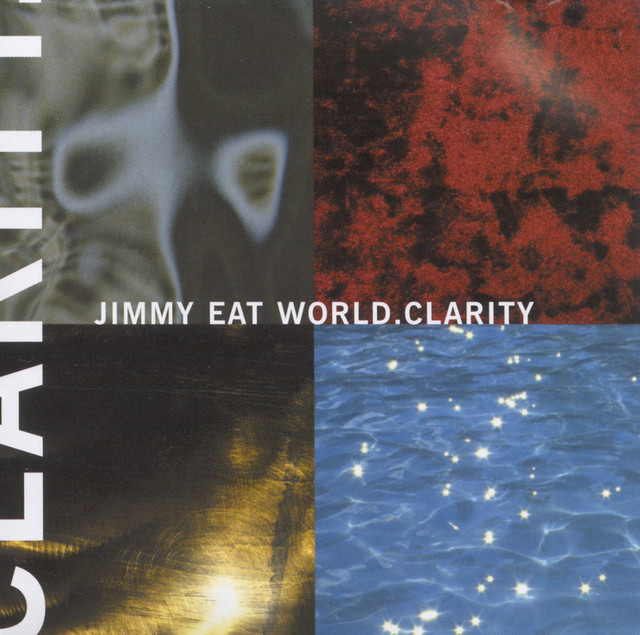
Album Review: Jimmy Eat World – Clarity (#MWE)

Like the majority of music fans, I am more familiar with Bleed American, Jimmy Eat World’s breakthrough album from 2001. Their previous effort Clarity, however, is considered very influential, and many claim it was commercially overlooked upon its release in 1999. Having finally heard the effort all the way through, I can attest to the praise: Clarity is a sharp, consistent album with a heavy replay factor.

Before we go any further, I must express my deep-seated bias for energetic pop-punk over the softer emocore. I have dabbled with The Hotelier and Modern Baseball, but I’m a Blue Album guy more than a Pinkerton guy. It’s just in my blood, y’all! But despite my penchant for fast-paced rhythms and chugging power chords, I can appreciate the impact of Clarity, a foundational album that lays the groundwork for an entire subgenre so effectively its imitators have all but rendered its most ingenious elements a cliche.

The album opens with the mellow, introspective “Table For Glasses,” followed by the now-classic single “Lucky Denver Mint.” These two openers set the tone for the rest of Clarity, and Jim Adkins’ and Tom Linton’s vocal harmonies are signature to the unmistakable sound of Jimmy Eat World.

The variety of instrumentation is startling, but not overbearing; this is not a typical guitar-and-drums listen by any stretch. Zach Lind’s electronic percussion programming, particularly on the aforementioned “Mint,” is akin to something a maturing Blink 182 would lift several years later. Lind’s bells and chimes layered throughout bolster the album’s pensive framework, a perfect setting for the existential, sometimes somber lyrics to shine through.

At times, we can hear what was to come: “Your New Aesthetic” features a chugging guitar intro reminiscent of the band’s future blockbuster hit “The Middle.” Unlike that Bleed American single, however, the song isn’t upbeat or optimistic, but rather insular and shoegaze-influenced. But Jimmy Eat World have always been able to tug at the heartstrings, as is clear on the Weezer-esque “Believe What You Want,” sporting screeching guitars and an anthemic chorus. Meanwhile, “A Sunday” is wistful and pensive with just a tinge of outward emotion and melancholy, a style Chris Carrabba of Dashboard Confessional would adopt.

While the arrangements keep us guessing, the mood rarely changes. This hampers the project slightly, as filler starts to creep in near the middle. Thankfully, things pick up near the end with highlight “Just Watch the Fireworks,” featuring violins and other warm instrumentation. The album closes with a series of Clarity’s strongest tracks: fan favorite “For Me This Is Heaven,” the welcome change of pace “Blister,” the riff-heavy title track, and the epic 16-minute “Goodbye Sky Harbor.”

The heart-on-sleeve influence of Clarity cannot be ignored, but the band refined their style and made a better album a couple of years later, one that arrived just in time for them to receive the accolades they deserved. Clarity is Bleed American’s introverted older brother. The latter may have been more outgoing and more popular, but it owes a lot to what came before. In fact, so does all of modern emo.

Score: 7/10


Feb 1 2022

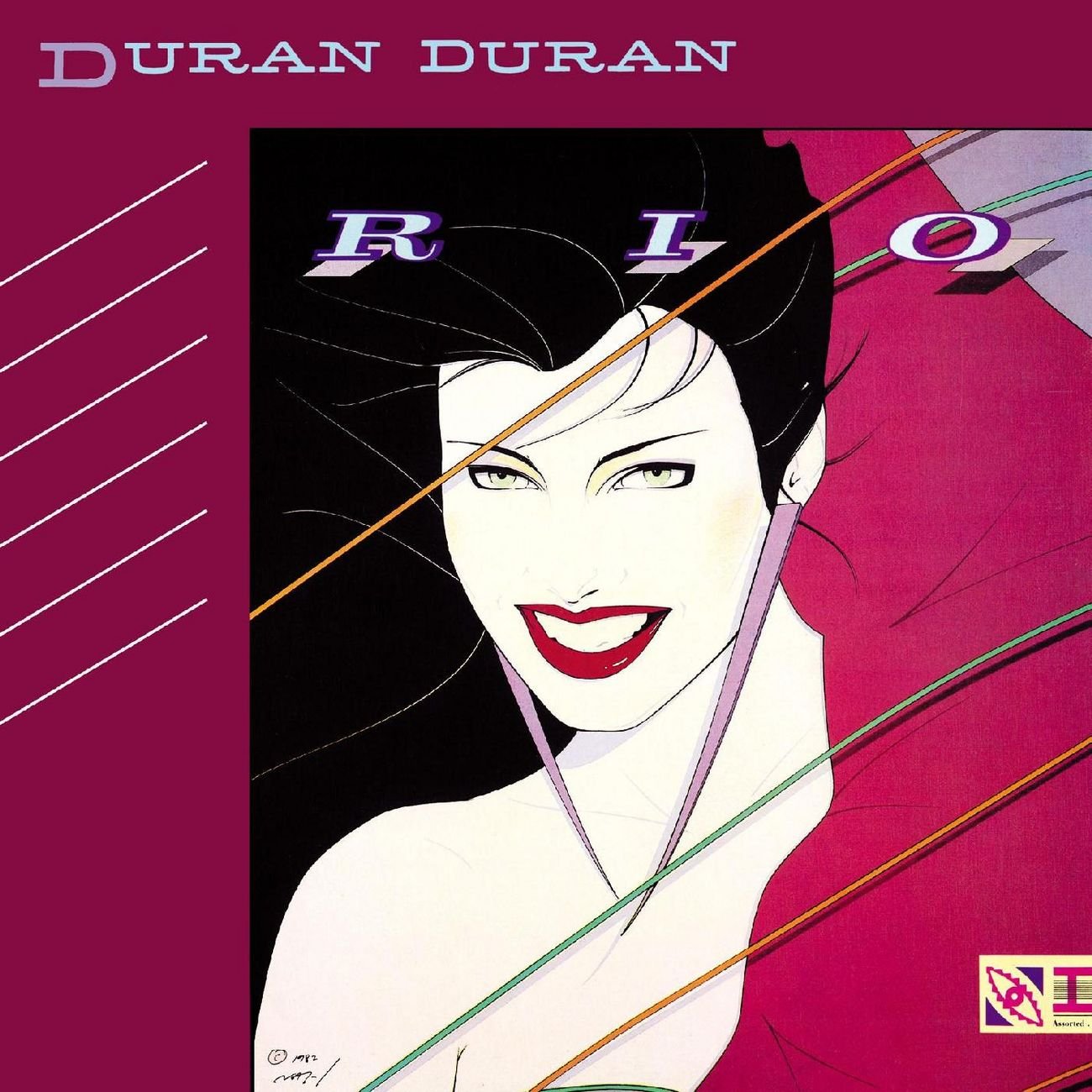
Album Review: Duran Duran – Rio (#MWE)

Rio is considered Duran Duran’s magnum opus, and now that I’ve finally heard it for myself, I wholeheartedly agree. The album is a near-perfect transition from the band’s New Romantic bona fides to the full-on new wave hedonism that was taking hold. When fanatics of this period (read: me) say the 1980s was a great decade for music, we’re talking about shit like this.

Out of the many, many acts that cropped up during this time, Duran Duran probably had one of the more polished approaches to the sound, and their sharp looks and stylish visuals helped them rise to the top of MTV rotation. As is evident throughout Rio, vocalist Simon Le Bon’s confident yelp is paramount to Duran Duran’s distinction from their peers, as are Andy Taylor’s riffs.

But for my money, the backbone of the band is John Taylor’s workmanlike approach. The title track in particular reinforces this, as Rio dances across the Rio Grande to boisterous bass lines, alongside sprinting synths from Nick Rhodes and a sexy sax solo from session player Andy Hamilton. The band knows their way around a hook and an infectious dance beat, as is the case on lead single “My Own Way,” featuring shuffling percussion courtesy of Roger Taylor. (None of the Taylors are related, which is an interesting thing about Duran Duran that doesn’t get talked about nearly enough.)

Then there’s the immortal “Hungry Like the Wolf,” an eternal jam primarily because of that “doo doo doo” hook that carries the verses to infectious heights. The vibe is similar throughout; even deep cuts like “Hold Back the Rain” and “New Religion” are irresistibly danceable jams.

The album is a bit front-loaded, but Side 2 is hardly skippable. The party slows down and draws to a close with the more subdued “Save a Prayer” and “The Chauffeur.” Initially I was disappointed by this change of pace, but these final songs actually function well and mix things up, keeping the listener fairly engaged over nine tracks. What is consistent, however, is the energy; it’s clear the band is having fun, which only adds to the staying power of this classic album. It sounds like 1982, no question, but that’s hardly anything to complain about.

Score: 8/10